Sentryx cybersecurity courses for beginners are practical, plain-English and built from real work: penetration tests, security operations and incident response. Every lesson is written by a working security engineer, so you can use what you learn straight away.
New to security, changing careers, or adding security skills to an IT job? Start with the course below, then follow the learning path further down the page.
Available now
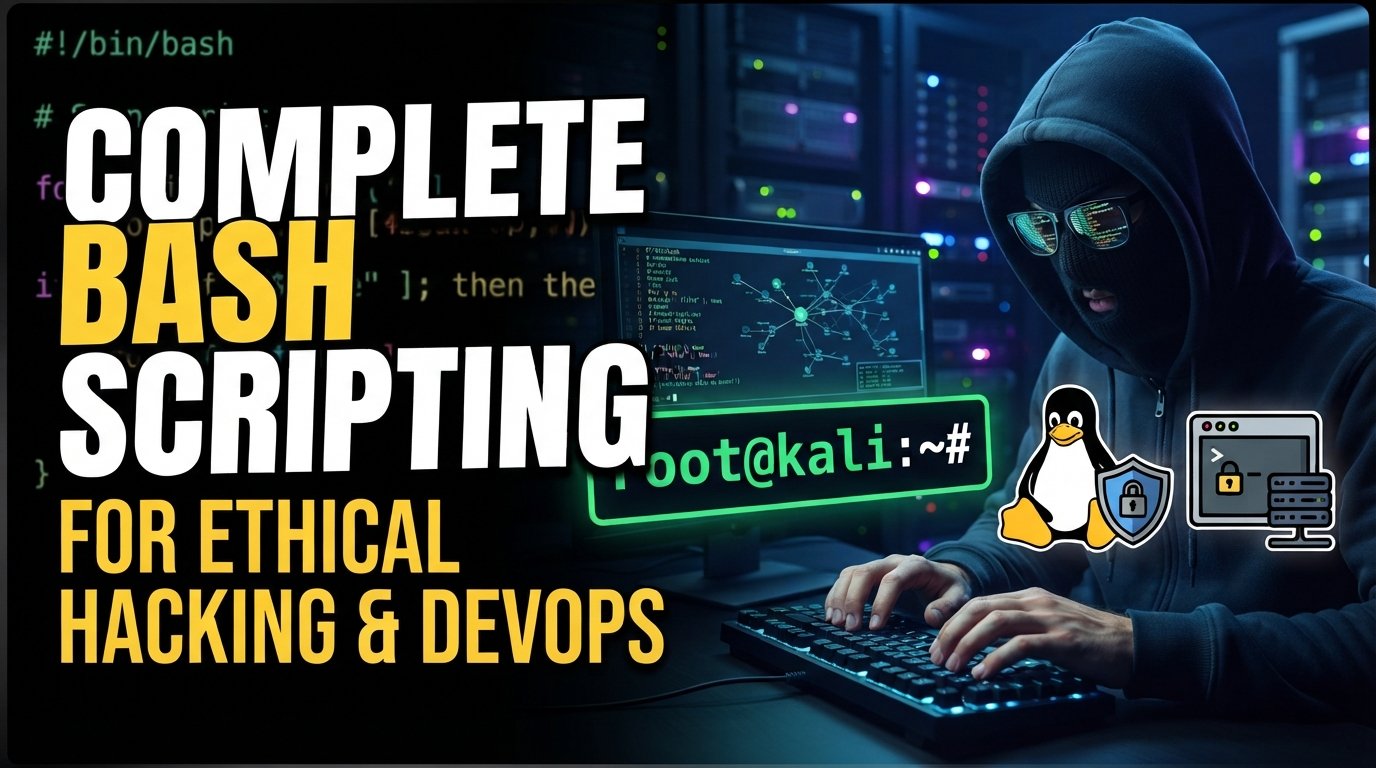
Complete Bash Scripting Guide: Essentials for Ethical Hacking & DevOps on Linux
A free video course that teaches Bash scripting on Linux from the ground up: variables, conditionals, loops, functions and automation, with real scripts for security tasks and DevOps work.
More courses are added as they are finished. Each course page says clearly whether it is free or paid.
What our cybersecurity courses cover
Five areas, in the order most people meet them when they move into security.
- Linux and scriptingThe command line and automation skills every security role relies on. Start with the Bash scripting course.
- Ethical hacking basicsHow attackers think, how penetration tests are scoped and what a good finding looks like, always within legal and authorised limits.
- Security operations and SIEMHow a SOC collects logs and turns them into alerts. See our SIEM comparison for a first look at the tools.
- Blue team and incident responseDetection, triage and containment. Read the ransomware incident response runbook we use.
- Careers and certificationsWhich certifications matter, what junior roles involve and how long the move takes. Start with the top 5 certifications for beginners.
A simple learning path for beginners
You do not need to learn everything at once. Work through these four steps in order.
- Learn Linux and BashTake the free Bash course and get comfortable in a terminal.
- Practise with free toolsUse our free online security tools to inspect links, headers and DNS records.
- Pick a directionRead the career roadmap and choose blue team or penetration testing.
- Prove your skillsBuild a portfolio and prepare with our exam study guides.
Who these courses are for
These cybersecurity courses for beginners suit career changers, students, and IT staff who want to add security skills. They also help anyone preparing for a role in penetration testing, security operations or DevOps. If you want to see how security jobs are defined, the NIST NICE Framework lists the work roles and skills employers use.
Not sure you are ready? Read how to switch careers into cybersecurity after 30 or how to start with no experience.
Frequently asked questions
Do I need experience to start these cybersecurity courses?
No. The courses start from the basics and explain each concept before the tool, so you know why you are doing every step. Basic comfort with a computer is enough.
Are the courses free or paid?
The Bash scripting course is free. As new courses are published, each course page states clearly whether it is free or paid before you start.
What do I need to follow the labs?
A computer that can run Linux, either installed directly or in a virtual machine such as VirtualBox. All exercises use free tools, so you do not need to buy software.
Who teaches the courses?
Hassan Mazhar, a security engineer who still works hands-on in penetration testing, security operations and security advisory. The lessons come from real engagements, not from textbooks. You can read more about Sentryx and Hassan.
Can I get a certificate or a job from these courses?
The courses build skills and a portfolio. They do not replace industry certifications such as Security+ or CISSP, and we do not promise a job. Our study guides and certification comparison help you plan that step.
Not sure where to start?
Tell us your background and what you want to do in security. We will suggest which course or free resource to try first.
Email hassan@trysentryx.comPrefer to browse? See our security blog or cybersecurity services for small business.