
Cybersecurity has a reputation problem. Scroll through job boards and you’ll see postings demanding five years of experience for an “entry-level” role, alphabet-soup certifications, and a computer science degree. It’s enough to make anyone with zero background close the tab.
Here’s the truth: most people working in cybersecurity today didn’t start there. They started in IT help desks, network administration, software development, the military, even completely unrelated fields — and worked their way in deliberately. There is a real path from “no experience” to “hired,” and it doesn’t require a four-year degree. It requires a plan.
This guide lays out that plan.
1. Understand What the Industry Actually Needs
Before you touch a single tool, get clear on this: cybersecurity is not one job. It’s a collection of specialties — security operations (SOC analyst), penetration testing, governance/risk/compliance (GRC), cloud security, incident response, application security, and more. Each has a different entry point and skill set.
Most beginners find their fastest way in through Security Operations (SOC Analyst) or IT support roles that lead into security, because these roles value fundamentals over specialization. You don’t need to pick your “forever” specialty on day one — you need a way in the door.
2. Build the Fundamentals First
Employers can teach you a specific tool. What they can’t easily teach is whether you understand how systems actually work. Before certifications, before labs, spend real time on:
- Networking basics — how IP addressing, DNS, firewalls, and routing work
- Operating systems — comfort in both Windows and Linux, including the command line
- How the web works — HTTP/HTTPS, how a browser talks to a server, what a request/response actually looks like
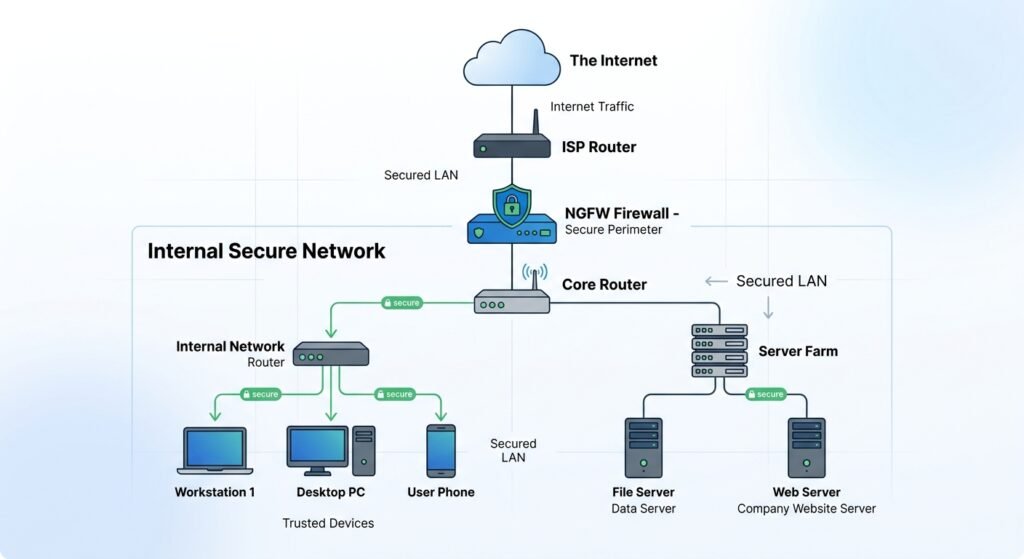
Free resources that cover this well: Professor Messer’s Network+ videos, the Cisco Networking Academy, and Linux Journey for command-line practice. You don’t need to master all of this before moving on — just get functional.
3. Pick One Entry-Level Certification and Earn It
Certifications won’t get you hired on their own, but they signal to a hiring manager (or an applicant tracking system) that you’re serious and have baseline knowledge. For someone with zero background, the standard starting point is:
- CompTIA Security+ — the most widely recognized entry-level security certification, vendor-neutral, and treated as a baseline requirement by many government and corporate SOC roles
- Google Cybersecurity Certificate (via Coursera) — a solid, affordable alternative if you want something more guided and beginner-friendly before tackling Security+
Pick one. Don’t collection-hoard certifications before you have any practical skills to back them up — a resume full of badges with no hands-on experience raises more questions than it answers.
4. Get Hands-On — This Is Non-Negotiable
This is the step most beginners skip, and it’s the one that actually separates candidates. Reading about security is not the same as doing security. Build a home lab and practice on realistic, legal targets:
- TryHackMe and Hack The Box — guided, beginner-friendly rooms/challenges that teach real offensive and defensive skills
- A home virtual lab — use VirtualBox or VMware to spin up a vulnerable machine and a Kali Linux box, and practice attacking and defending in an isolated environment
- Blue team practice — set up a free SIEM (like a Splunk free tier or the ELK stack) and learn to read logs and spot anomalies, since most entry-level roles are defensive, not offensive

Log every exercise you complete. This becomes the raw material for your portfolio.
5. Build a Visible Portfolio
Hiring managers in security are often more convinced by evidence than by a resume line. Turn your learning into something visible:
- A simple blog or LinkedIn posts documenting what you learned each week (a TryHackMe room you completed, a concept you finally understood, a home lab you built)
- A GitHub with any scripts, notes, or small tools you’ve written, even simple ones
- CTF (Capture the Flag) write-ups — even placing outside the top ranks, a clear write-up of your thought process shows real problem-solving
This portfolio does double duty: it proves initiative, and it gives you concrete talking points for interviews instead of vague claims like “I’m passionate about security.”
6. Network Deliberately, Not Passively
Cybersecurity has an unusually open, community-driven culture. Use it:
- Join security-focused Discord servers and subreddits (r/cybersecurity, r/AskNetsec)
- Follow and engage with practitioners on LinkedIn — comment thoughtfully, don’t just lurk
- Attend local meetups or virtual conference talks (many BSides events are free or low-cost)
A large share of entry-level security hires come through referrals and community connections, not cold applications. Showing up consistently in these spaces, asking good questions, and sharing your progress puts you on people’s radar before a job even opens.

7. Target the Right Job Titles
Stop applying only to roles with “Cybersecurity” in the title — that’s the most competitive tier. Instead, look for roles that are realistic entry points:
- SOC Analyst (Tier 1) — monitoring alerts, triaging incidents
- IT Support / Help Desk — a classic stepping stone; many security professionals started here and moved laterally
- Junior GRC Analyst — if you’re more interested in policy, compliance, and risk than hands-on technical work
- Security Awareness / Training Coordinator — a good fit if you have communication or teaching strengths
Apply to these with your fundamentals, certification, and portfolio in hand — and be upfront in interviews about your learning process. Genuine curiosity and demonstrated effort consistently beat a padded resume.
8. Prepare for the Interview Differently
Technical interviews at the entry level rarely expect you to be an expert. They’re testing whether you can think through a problem and whether you actually understand what you claim to know. Be ready to:
- Walk through a home lab project in detail, including what went wrong and how you fixed it
- Explain a security concept simply, like how phishing works or what the CIA triad is
- Ask sharp questions about the team’s tools and workflows — it shows you understand the job, not just the buzzwords
The Bottom Line
Breaking into cybersecurity with no experience is absolutely realistic, but it’s not passive. It rewards people who build fundamentals, get their hands dirty in a lab, document their progress publicly, and network intentionally. There’s no single “right” path — but there is a proven pattern, and now you have it.
Start with one certification. Build one lab. Write one post about what you learned. Then repeat.
Leave a Reply