
If you’re planning your first cybersecurity certification, you’ve almost certainly landed on this exact question. Both CompTIA Security+ and EC-Council’s Certified Ethical Hacker (CEH) show up constantly in “best certifications” lists, both open real doors, and picking the wrong one first can cost you months of study time and a meaningful amount of money on an exam you weren’t actually ready for.
Here’s the honest comparison, and the answer nearly every current source in this space converges on.
What each certification actually teaches
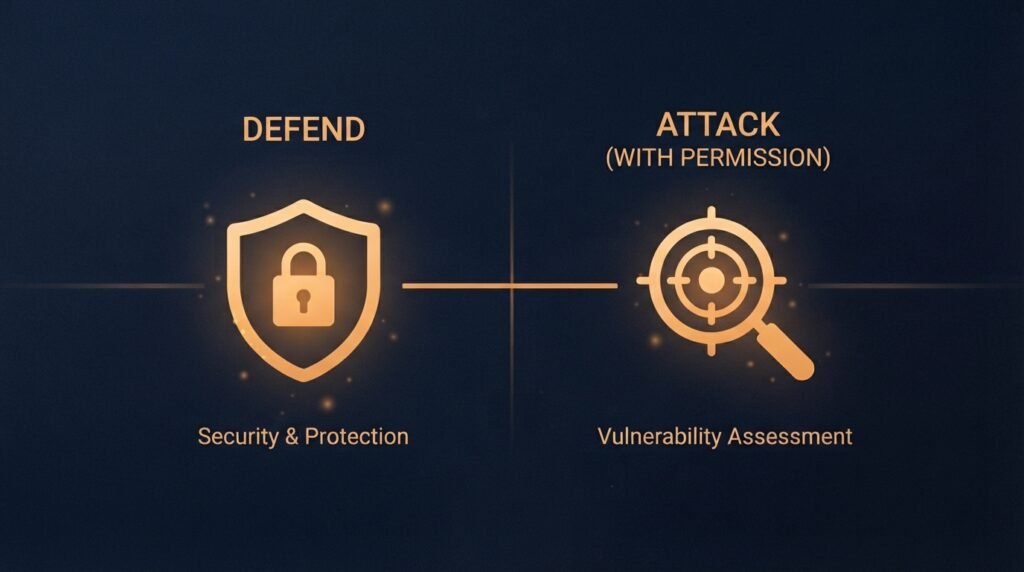
Security+ is a broad, foundational certification covering the core concepts every security professional needs: network security, risk management, threats and vulnerabilities, cryptography basics, identity and access management, and security operations. It’s designed to build a wide base of knowledge rather than deep specialization in any one area. As of mid-2026, CompTIA refreshed the exam objectives to include generative-AI security risks, supply-chain security, and CMMC 2.0 content, keeping it current with what the field actually looks like today.
CEH is a specialized, offensive-security certification. It teaches the tools and methodology real attackers use — reconnaissance, scanning, exploitation, and post-exploitation techniques — so that certified professionals can legally and ethically test systems for the same weaknesses a malicious hacker would look for. It assumes you already understand networking and security fundamentals, rather than teaching them from scratch.
The real differences, side by side
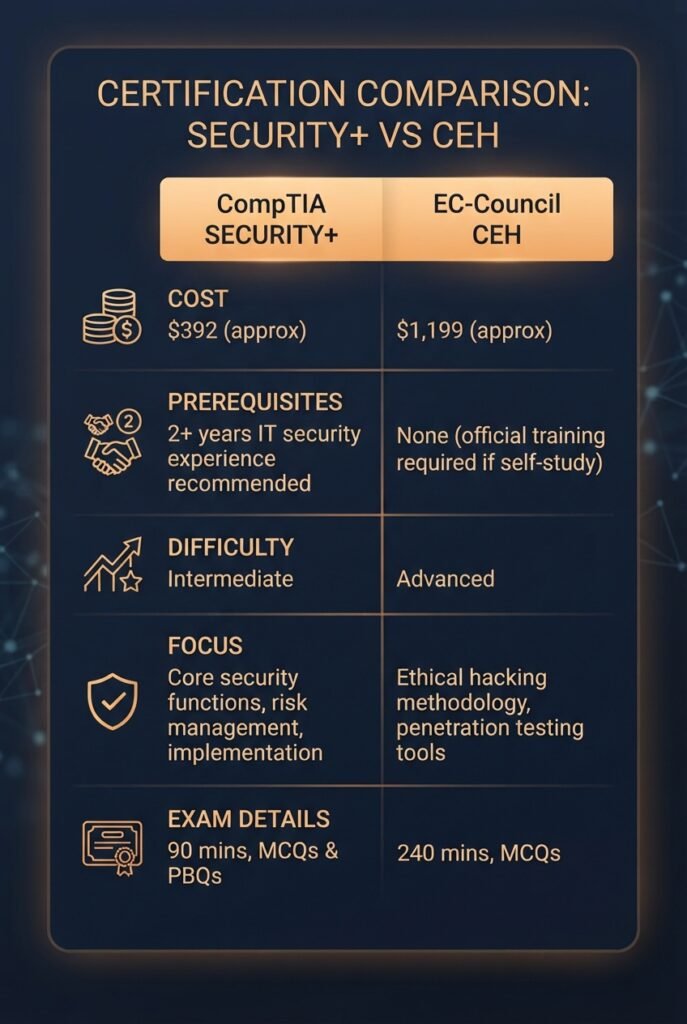
- Cost. Security+ runs roughly $400–$450 for the exam voucher alone, with total prep costs commonly landing between $1,500–$3,000. CEH costs considerably more — the exam fee alone is typically $950–$1,200, and with official required training, total cost often reaches $3,000–$5,000.
- Prerequisites. Security+ has no formal entry requirements, though CompTIA recommends around two years of general IT experience. CEH requires either two years of documented work experience in information security or completion of official EC-Council training before you’re eligible to sit the exam.
- Difficulty. Security+ is designed to be passable by a motivated beginner in two to three months of study. CEH is considered meaningfully harder, and its content assumes a working knowledge of networking and security concepts that Security+ is specifically designed to teach — so attempting CEH first often means learning two things at once instead of one.
- Exam format. Security+ uses up to 90 questions across multiple-choice and performance-based formats within a 90-minute window. CEH is 125 multiple-choice questions over four hours, with an optional separate practical exam in a live hacking lab for those who want to demonstrate hands-on skill.
- Recognition. Security+ has broader recognition across defensive security, compliance, government, and entry-level roles generally, and it satisfies the U.S. Department of Defense’s baseline certification requirement (DoD 8140/8570) for a wide range of positions. CEH is recognized specifically within offensive security and penetration testing circles — though in that same space, experienced hiring managers often weight OSCP (a harder, more hands-on offensive certification) even more heavily than CEH.
The verdict nearly everyone agrees on

For the large majority of people entering cybersecurity, Security+ first is the right call. It’s cheaper, faster to prepare for, more broadly recognized across employers and roles, and it builds the exact defensive foundation that CEH’s offensive content quietly assumes you already have. Multiple independent sources covering this exact comparison in 2026 reach the same conclusion: get Security+ first, then add CEH afterward if your specific role or career direction genuinely calls for it.
When CEH first might actually make sense
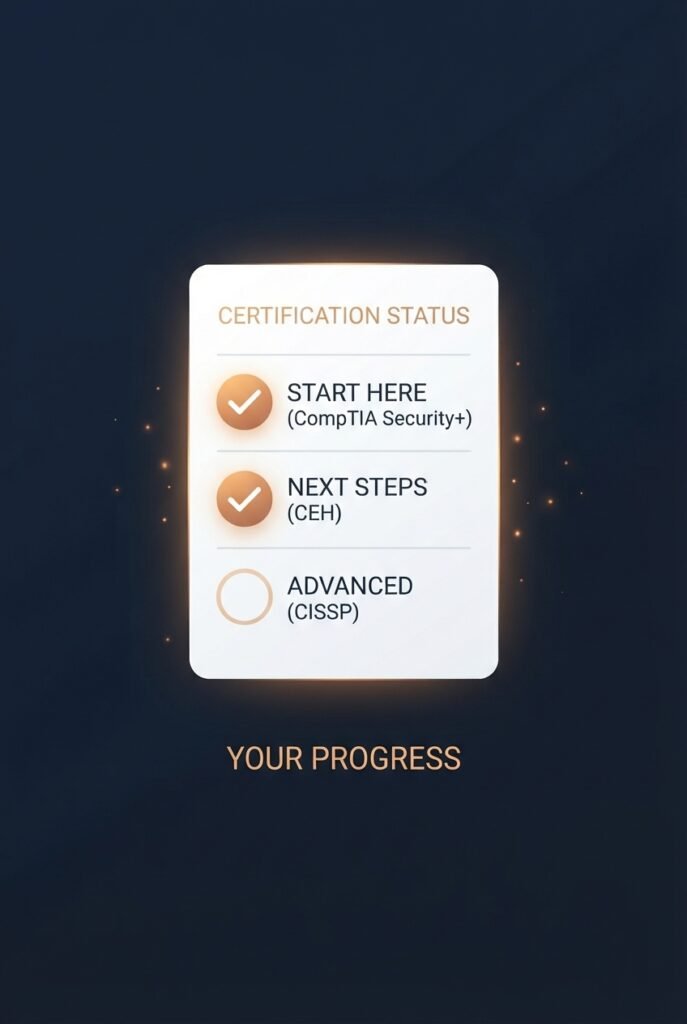
There are real exceptions to the general rule:
- You already have solid networking and security fundamentals — from prior IT experience, a related degree, or self-study — and you’re specifically targeting a penetration testing or red team role from the start.
- A specific employer or program requires CEH directly, which does happen in some government and defense contracting contexts, though Security+ satisfies the same baseline requirement in most of those same contexts.
- You’re already employed in IT or security and your organization is funding the more expensive certification as part of a defined career path toward offensive security.
Outside of these situations, most people who attempt CEH without a Security+-level foundation first find the exam considerably harder than expected, precisely because it assumes knowledge it doesn’t teach.
What actually happens to your salary
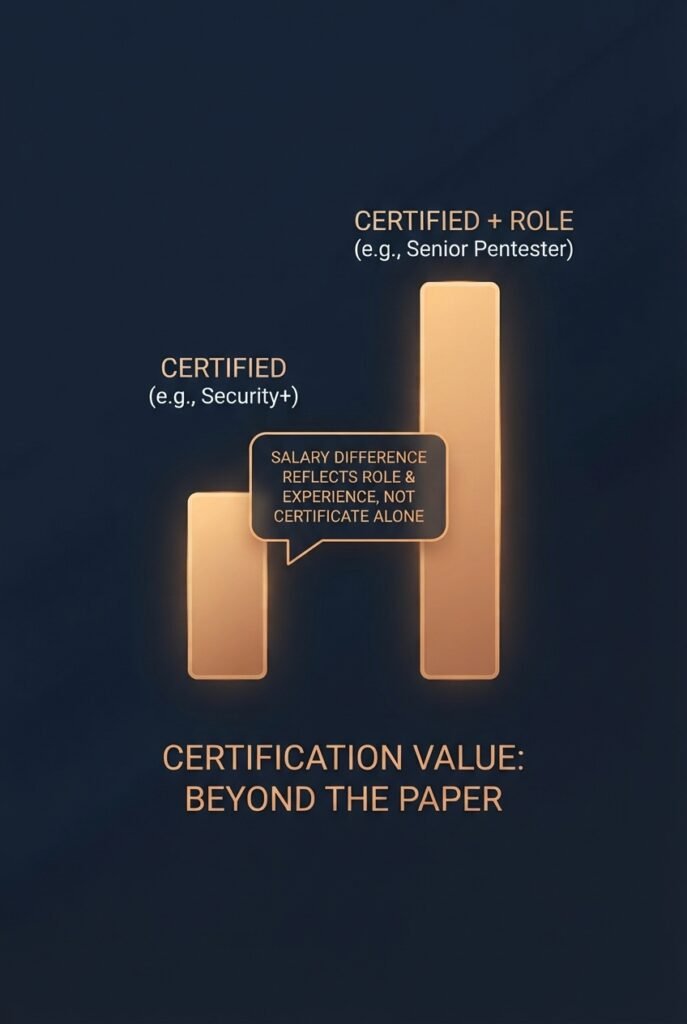
On paper, CEH holders often show higher average salaries than Security+ holders — but that gap largely reflects the more senior, specialized offensive-security roles CEH tends to lead toward, not something the certificate itself creates. Early in a career, Security+ gets people hired faster and more affordably into a wider range of roles. The larger salary jump associated with offensive security comes from actual hands-on experience and demonstrated skill, which CEH signals but doesn’t substitute for on its own.
The bottom line
Security+ and CEH aren’t really competing for the same spot — one builds a broad defensive foundation, the other proves specialized offensive skill on top of that foundation. For nearly everyone starting out, that means Security+ first, CEH later if your career path actually calls for it. Skipping straight to CEH without that foundation usually means a harder exam, a higher price tag, and content that assumes knowledge you haven’t built yet.
If you’re mapping out where either path actually leads in terms of pay and role, our post on the highest-paying cybersecurity jobs in 2026 breaks down where defensive and offensive specialties both top out.
Leave a Reply