Your smart speaker is listening. Your smart TV is tracking what you watch, down to the second. Your video doorbell knows exactly when you leave for work. None of this is a conspiracy theory, it’s in the terms of service you scrolled past, and in several cases, it’s been confirmed by lawsuits, security researchers, and the companies themselves.
We’ve filled our homes with convenience, and in exchange, quietly handed over an enormous amount of personal data. Here’s what’s actually happening behind the friendly blinking lights.
What Your Smart Devices Are Actually Collecting
Smart Speakers Record More Than “Wake Words”
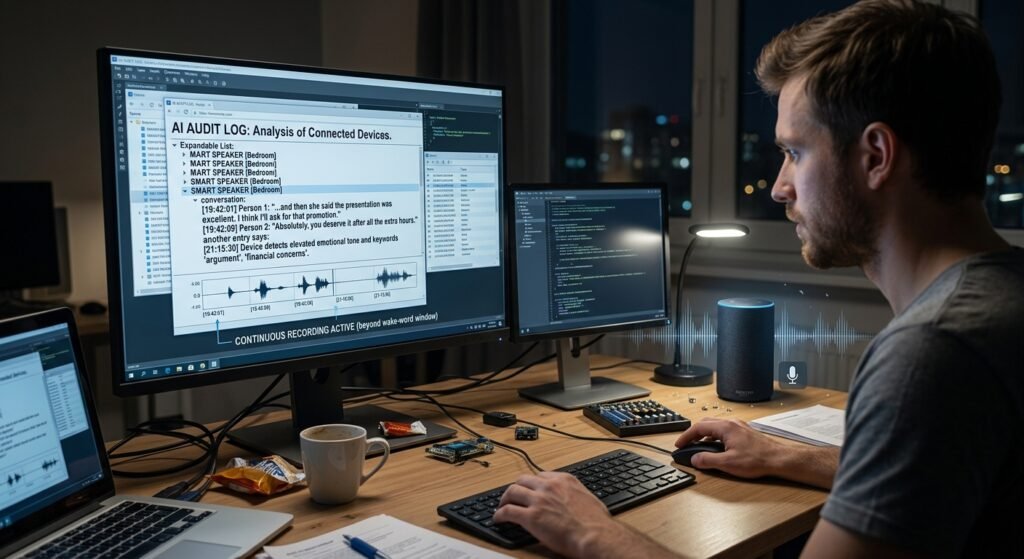
Voice assistants like Alexa and Google Assistant are designed to only start recording after hearing their wake word, but they’ve been caught doing otherwise. Amazon has faced lawsuits and FTC settlements over Alexa recordings being kept indefinitely and reviewed by human contractors, even years after parents requested children’s voice data be deleted.
Smart TVs Track Everything You Watch
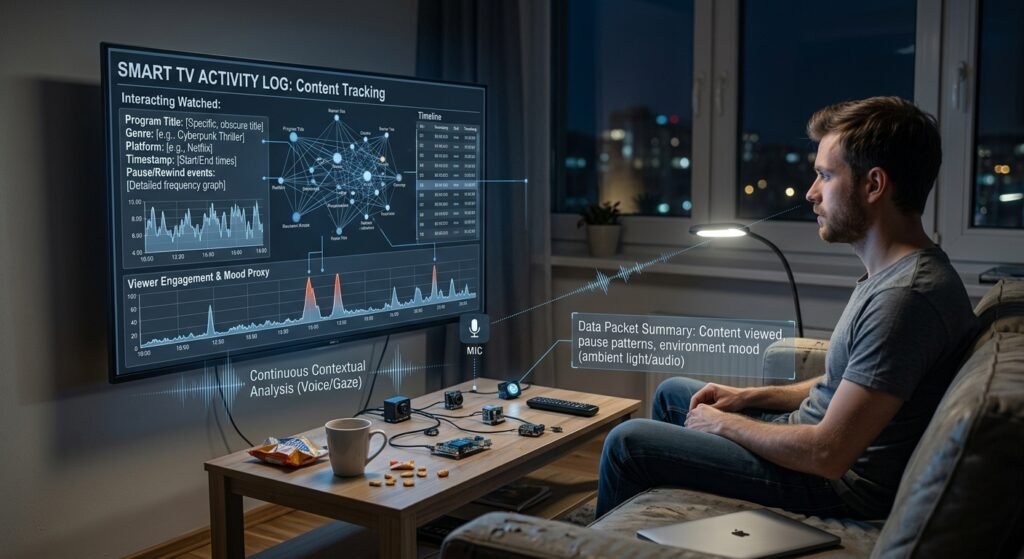
Most modern smart TVs use a technology called ACR (Automatic Content Recognition), which identifies what’s on your screen, even content from a separate streaming device or gaming console plugged into the TV and sends that viewing data back to advertisers. This isn’t a rare feature; it’s on by default on the vast majority of smart TVs sold today.
Video Doorbells Share Footage With Police — Sometimes Without Your Consent
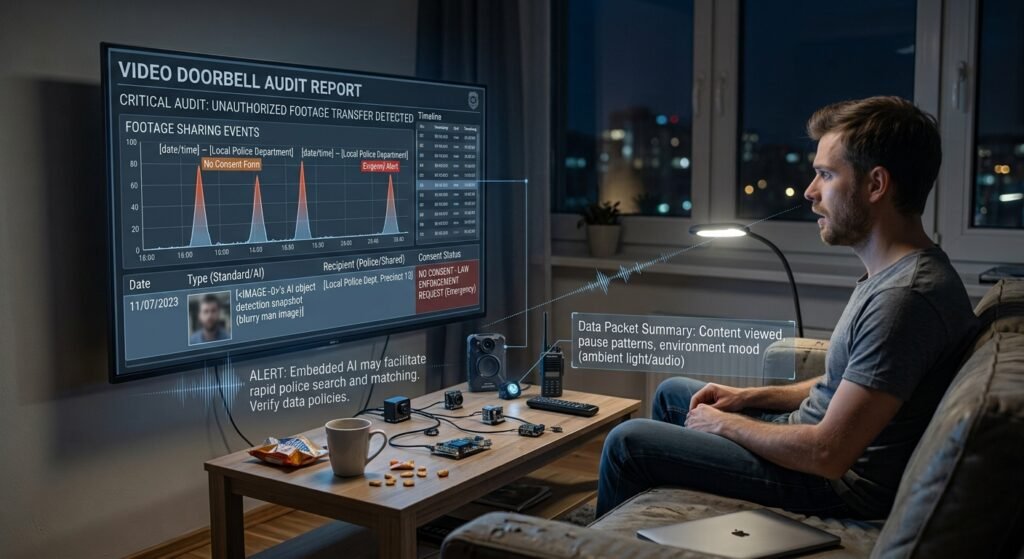
Ring, one of the most popular video doorbell brands, has partnered with thousands of police departments across the U.S., allowing law enforcement to request footage directly from users. In some documented cases, footage was shared with police without the device owner’s explicit consent, raising serious questions about who actually controls that footage.
Smart Vacuums Are Mapping the Inside of Your Home
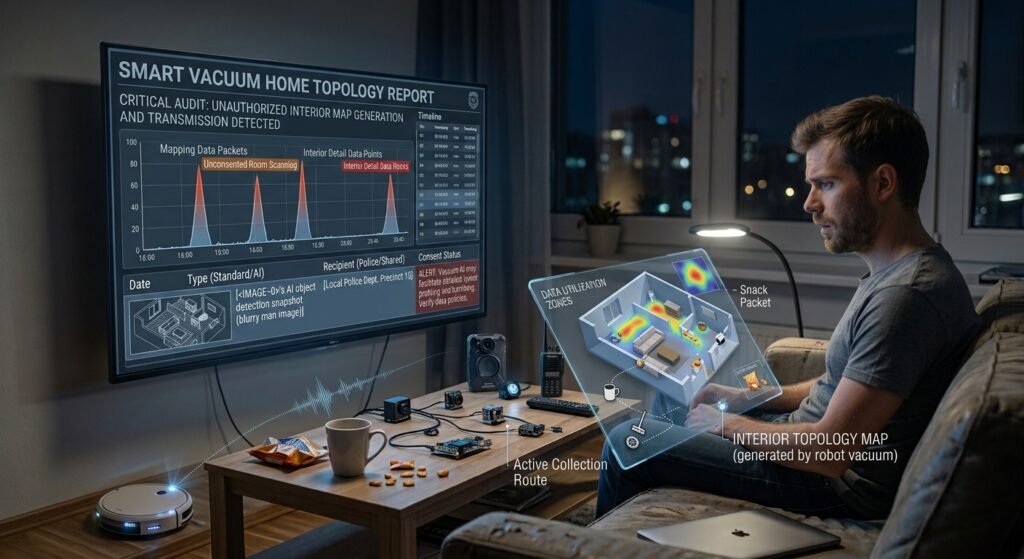
Robot vacuums build detailed floor plans of your home to navigate efficiently, but that map data doesn’t always stay on the device. Some manufacturers have been reported to share these floor plans with third parties, including tech companies interested in smart home advertising data.
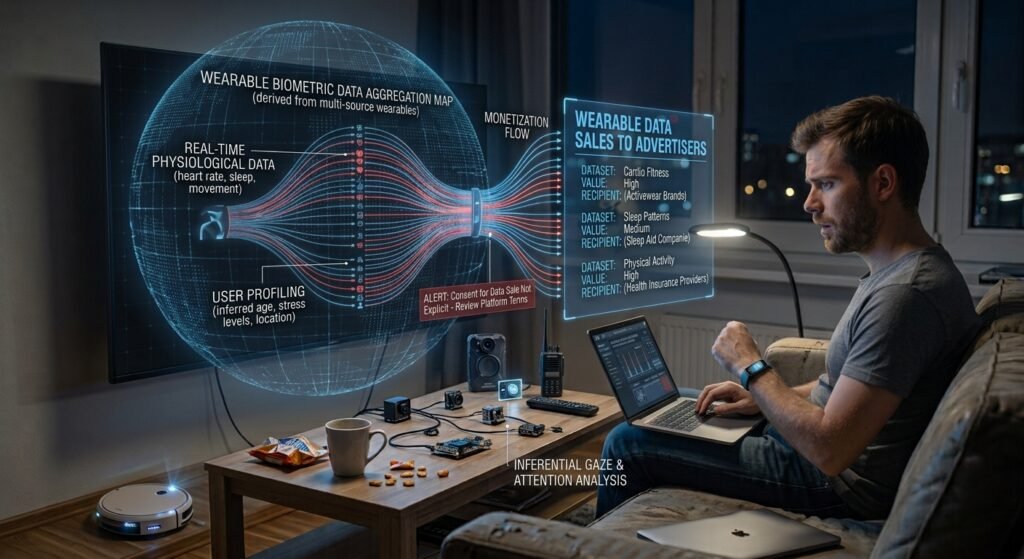
Fitness and Health Wearables Sell Data to Advertisers
Smartwatches and fitness trackers collect deeply personal data, heart rate, sleep patterns, location history, and in several documented cases, that data has been sold to data brokers or used for targeted advertising, often buried in terms of service most users never read.
Why This Matters More Than It Seems
It’s easy to shrug this off, “I have nothing to hide.” But the real risk isn’t usually a person snooping on you specifically. It’s:
- Data breaches. Every company collecting your data is a company that can be hacked, and smart home companies have had real, damaging breaches.
- Data brokers. Your habits, location patterns, and even health data can be bundled and sold to advertisers, insurers, or other third parties without you ever seeing a dime or a clear opt-out.
- Function creep. Data collected for one purpose (like voice commands) quietly gets used for another (like ad targeting or law enforcement requests) once it’s already been collected.
7 Ways to Take Back Control of Your Smart Home
1. Review and Delete Voice Recordings Regularly
Both Amazon and Google let you view and delete stored voice recordings in their app settings. Set a recurring reminder to clear these out.
2. Turn Off ACR Tracking on Your Smart TV
Look in your TV’s settings for terms like “Viewing Data,” “ACR,” “Live Plus,” or “Smart Interactivity”, usually under Privacy or Terms of Use, and switch it off.
3. Use a Separate Guest Network for Smart Devices
Keep IoT devices on their own WiFi network, separate from your computers and phones, so a compromised smart device can’t be used to access more sensitive devices.
4. Cover or Disable Cameras and Mics You Don’t Actively Use
Physical camera covers and mute buttons are simple, reliable ways to guarantee a device isn’t recording, no matter what software says.
5. Read the Privacy Settings Before You Buy
Before purchasing a new smart device, search “[brand name] + privacy policy” or “[brand name] + data sharing” to see what you’re actually agreeing to.
6. Opt Out of Police Data-Sharing Partnerships Where Possible
If you own a video doorbell, check the app’s settings for law enforcement request options — many platforms now let you require a warrant before sharing footage.
7. Update Device Firmware Regularly
Manufacturers patch security vulnerabilities in these updates. An outdated smart device is a much easier target for hackers than an up-to-date one.
Frequently Asked Questions
Can smart speakers really record without the wake word? Documented cases show accidental recordings have occurred, and stored recordings have in some cases been kept and reviewed by human contractors longer than users expected.
Is it safe to have a smart TV at all? Yes, with adjusted settings. Turning off ACR tracking and reviewing app permissions significantly reduces what data is collected, without losing core functionality.
Do I need to throw out my smart home devices to be safe? Not necessarily. Most of the risk can be reduced through settings changes, network segmentation, and regular firmware updates rather than eliminating the devices entirely.
Which smart home devices collect the most data? Smart speakers, smart TVs, and fitness wearables tend to collect the broadest range of personal data, since they combine audio, viewing habits, and biometric information.
Smart homes aren’t inherently dangerous — but “set it and forget it” is exactly how most of this data collection goes unnoticed. A few minutes in your settings menu is a small price for a lot more control.
Leave a Reply