
Antivirus software has a fundamental blind spot: it mostly catches threats it already recognizes. EDR — endpoint detection and response — exists to catch the threats that don’t look like anything on a known list: an attacker living off tools already on your system, credential theft that doesn’t involve malware at all, or behavior that only looks suspicious in context. It’s become one of the most commonly recommended upgrades for small businesses in 2026, and increasingly, one that cyber insurers are starting to require rather than just suggest.
Here’s what EDR actually does differently, what it costs, and how to tell whether your business genuinely needs it.
What EDR actually catches that antivirus doesn’t
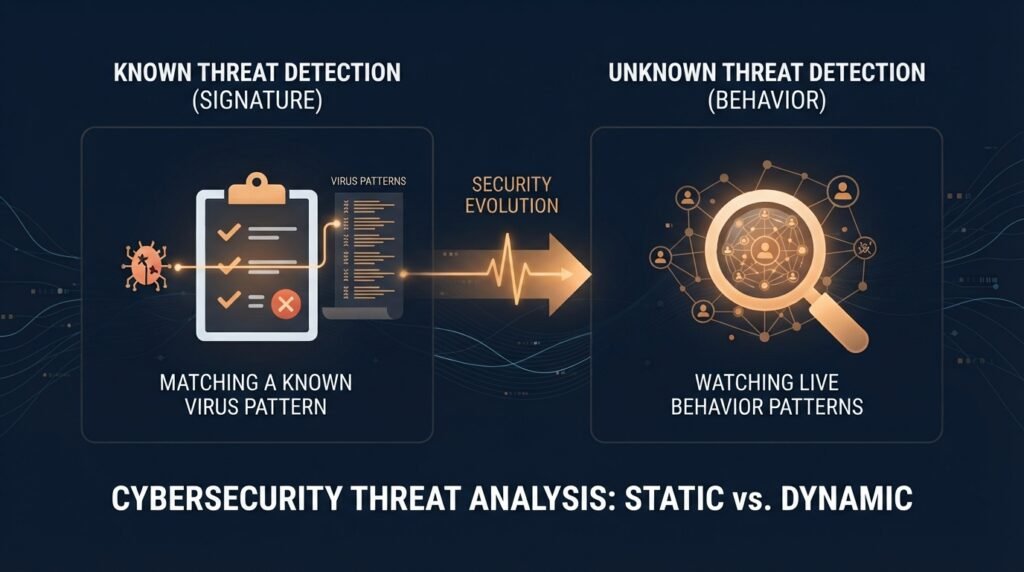
Traditional antivirus works primarily by signature matching — comparing files against a database of known malicious code. That approach still catches plenty of threats, but it has an obvious gap: it can’t recognize something it’s never seen before, and modern attackers know this. EDR closes that gap by watching behavior instead of just matching files, which lets it catch:
- Fileless attacks that operate entirely in memory without ever writing a recognizable malicious file to disk.
- Living-off-the-land techniques, where an attacker uses tools already legitimately installed on your systems — rather than introducing obvious malware — to move around undetected.
- Credential theft and misuse, flagging login and access patterns that look wrong even when no malware is involved at all.
- Early-stage reconnaissance, the quiet groundwork an attacker does before launching a more damaging second stage, which signature-based tools typically miss entirely.
When EDR does flag something, it doesn’t just alert — it can actively isolate a compromised device from the network, kill a malicious process, or roll back changes, containing an incident before it spreads to the rest of your systems.
The part that actually determines whether it works: response
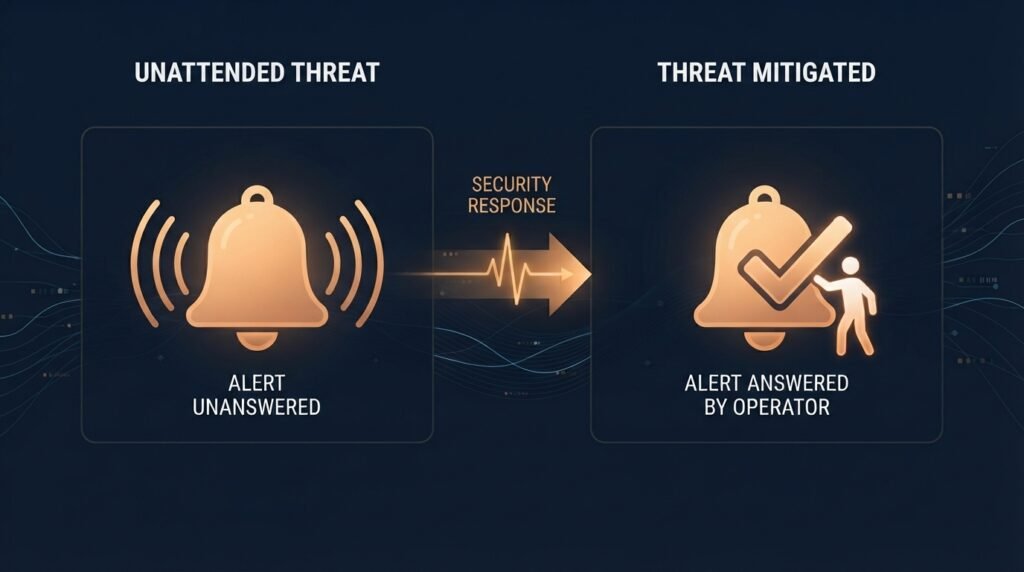
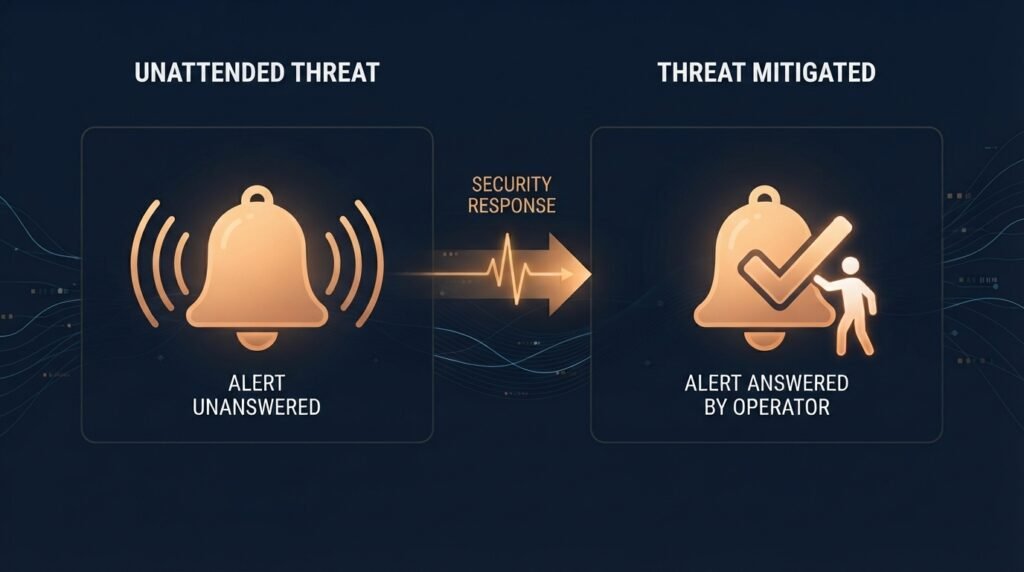
This is the detail that gets skipped in a lot of EDR marketing: detection without response just means you find out about the breach a little sooner. EDR tools generate a continuous stream of alerts, and without someone actually watching and acting on them, threats can sit flagged but unaddressed — which defeats much of the point. This is exactly why “EDR” and “managed EDR” have become two meaningfully different purchases, and the difference matters more than almost any feature comparison between vendors.
What EDR actually costs in 2026
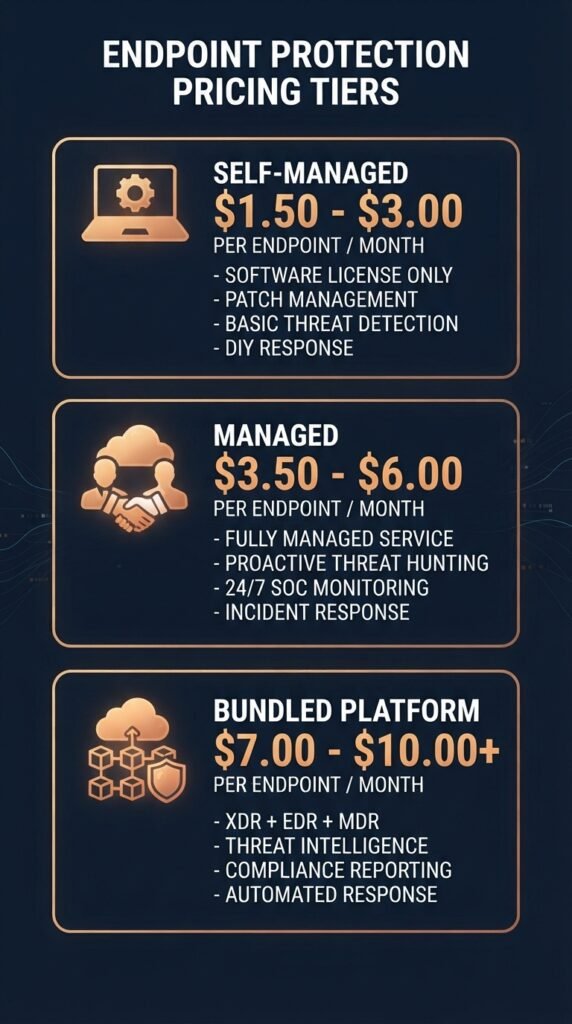
Pricing varies by how much is actually included, not just by brand:
- Self-managed EDR software alone typically runs $3 to $15 per endpoint per month — you get the detection technology, but your own team handles monitoring, alert triage, and response.
- Managed EDR, bundling the same technology with 24/7 human monitoring and active response, typically runs $5 to $45 per endpoint per month, with the range reflecting how much real response capability is included versus sold as a separate add-on.
- Microsoft Defender for Business, built on the same underlying technology as Microsoft’s enterprise products, runs roughly $3 per user per month standalone, or comes bundled into Microsoft 365 Business Premium at no additional cost.
- Bundled security platforms combining EDR with other tools typically run $20–$45 per endpoint per month, consolidating several separate purchases into one.
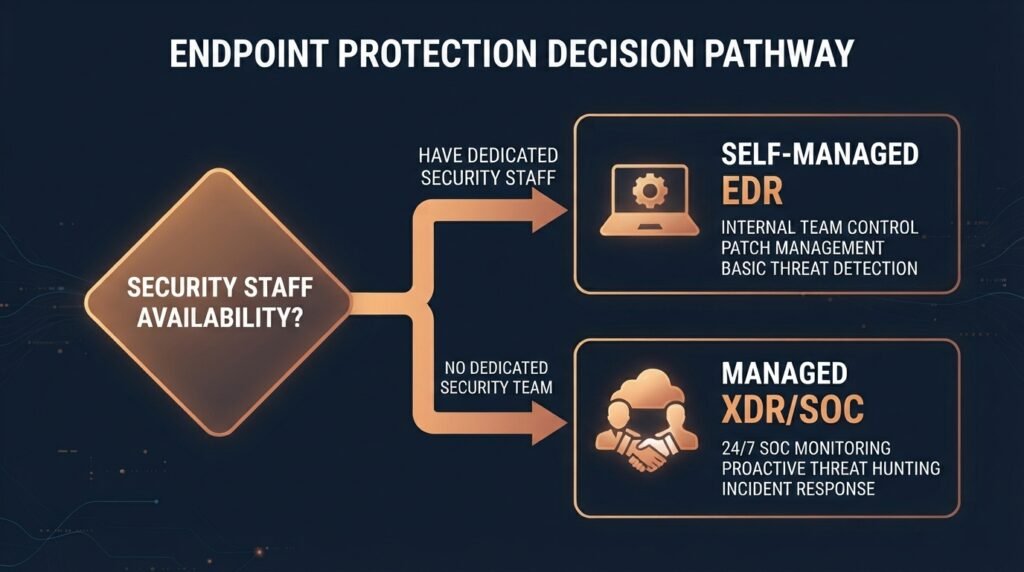
The decision that actually matters: self-managed vs. managed
Here’s a genuinely useful threshold, rather than an abstract feature comparison: if your team would need to spend more than 10 hours a week managing EDR — monitoring alerts, tuning detection rules, investigating flagged activity — managed EDR is almost certainly the more cost-effective choice once you factor in realistic, loaded labor costs, not just software pricing. A business running 25–50 endpoints commonly finds this work eating 10–15 hours a week if handled internally, translating to $15,000–$25,000 a year in additional personnel cost that never shows up on a software invoice.
For most small businesses without a dedicated security team, this makes the calculus fairly simple: a fully managed EDR service, paired with a real 24/7 team actually responding to what it finds, tends to be the more realistic and cost-competitive option — not because self-managed tools are worse, but because unmonitored alerts don’t protect anyone.
Do you actually need it?
A few honest signals point toward yes:
- You handle customer data, financial records, or anything where downtime would genuinely hurt. This exposure exists regardless of how many employees you have — attackers don’t check headcount before targeting a business.
- Your cyber insurance requires it, or will soon. As covered in our post on cyber insurance, insurers increasingly treat endpoint monitoring as a baseline requirement for coverage, not an optional upgrade — and this is accelerating, not slowing down.
- You’re already running standard antivirus and nothing more. Signature-based protection alone leaves the exact gap — fileless attacks, credential misuse, living-off-the-land techniques — that EDR exists to close.
- A breach costing tens of thousands of dollars would seriously hurt your business. As covered in our post on the real cost of a data breach, that’s a realistic outcome even for a small incident, and EDR’s cost is genuinely modest by comparison.
Where it’s a closer call: an extremely small operation with minimal digital footprint and no sensitive data might reasonably prioritize other basics first — strong passwords, MFA, backups — before EDR specifically. But that calculation narrows every year, as EDR pricing has become considerably more accessible than it was even a couple of years ago.
The bottom line
EDR fills a real, specific gap that antivirus alone can’t — catching behavior-based and fileless attacks that don’t match any known signature. But the technology only matters if something is actually watching and responding to what it finds, which is why the real decision for most small businesses isn’t “which EDR tool” so much as “self-managed or fully managed.” For a business without dedicated security staff, managed EDR — technology plus a real team behind it — is usually the version that actually protects you, not just the version that generates the most alerts.
This pairs directly with the endpoint protection and backup fundamentals covered in the Small Business Cybersecurity Risk Checklist, worth revisiting if you’re still relying on antivirus alone.
Leave a Reply