
Every business that handles customer data, payments, or sensitive systems needs someone accountable for security strategy. Large companies hire a full-time Chief Information Security Officer (CISO) to do that. For most small and mid-sized businesses, a full-time CISO is out of reach, both in cost and in how much work there is to fill the role.
That gap is why the vCISO has become so common. Here’s what a vCISO is, what they actually do, and how to tell whether your business needs one.
What Is a vCISO?
A vCISO, or virtual Chief Information Security Officer, is an experienced security leader who provides CISO-level guidance to a company on a part-time, contract, or retainer basis. You may also hear the terms “fractional CISO” or “CISO-as-a-service,” which mean essentially the same thing.
Instead of employing an executive full-time, you engage an expert for a set number of hours each month. They bring the strategic oversight of a senior security leader without the salary, benefits, and recruiting effort of a permanent hire.
What Does a vCISO Actually Do?
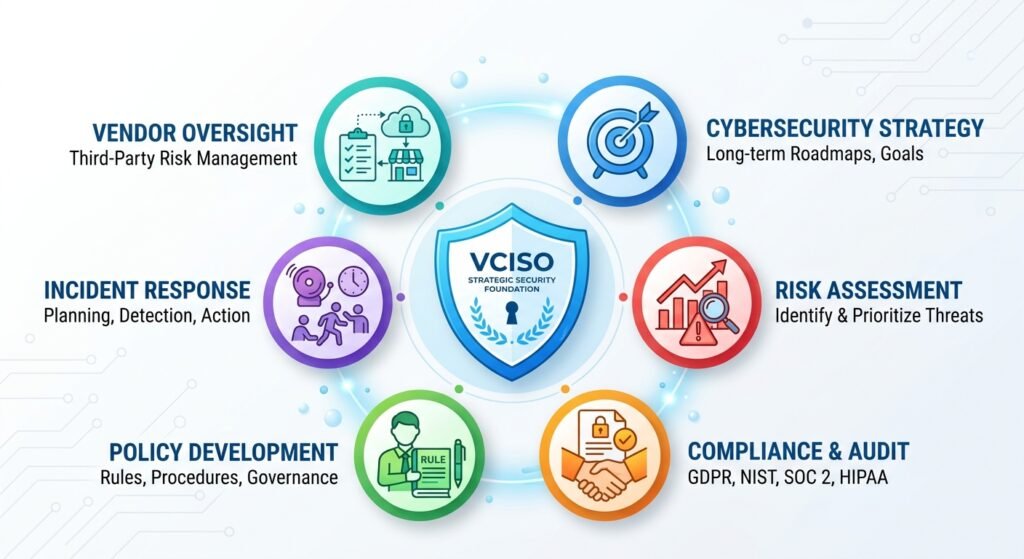
The role is about leadership and direction, not day-to-day technical tasks like patching servers. Typical responsibilities include:
- Building the security strategy. Defining what needs protecting, what the biggest risks are, and a realistic roadmap for reducing them over time.
- Risk assessment. Identifying where the business is most exposed and prioritizing fixes by actual impact, not just by what’s loudest.
- Policies and governance. Writing and maintaining the security policies, standards, and procedures that auditors and customers expect to see.
- Compliance guidance. Helping the business prepare for frameworks and requirements such as SOC 2, ISO 27001, HIPAA, or PCI DSS, depending on the industry.
- Incident response planning. Making sure there is a documented plan for what happens when something goes wrong, and that the team has practiced it.
- Vendor and third-party risk. Reviewing the security of the suppliers and software the business depends on.
- Reporting to leadership. Translating technical risk into plain business language for executives and the board.
- Guiding the team. Mentoring IT staff, advising on tooling decisions, and helping security awareness training actually land.
vCISO vs. Full-Time CISO
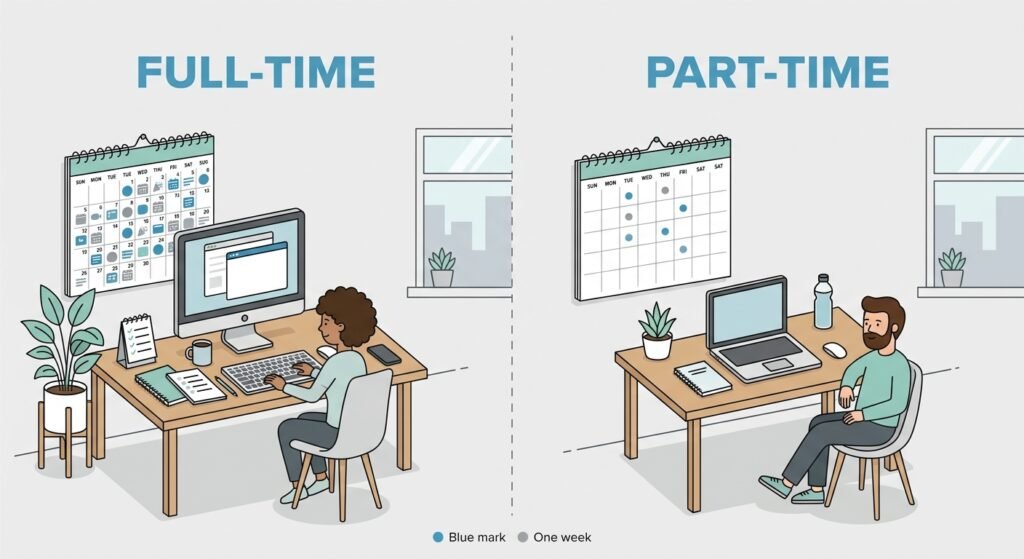
The differences come down to cost, time, and depth of involvement.
- Cost. A full-time CISO is a senior executive hire with a salary well into six figures, plus benefits. A vCISO is typically a fraction of that, paid monthly based on the scope of work.
- Availability. A full-time CISO is embedded in the company every day. A vCISO works a defined number of hours and is not on call for every small question.
- Experience breadth. Because vCISOs work with several organizations, they often bring a wide view of how different companies handle similar problems.
- Scalability. You can increase or reduce a vCISO’s hours as your needs change, which is much harder to do with a permanent employee.
- Depth of context. A full-time CISO will usually know the company’s people and systems more intimately over time, which is a real advantage for larger, more complex organizations.
Signs Your Business Might Need a vCISO

A vCISO makes sense when the business has real security responsibilities but no one owning them. Common signals include:
- Customers or partners are asking for security documentation. Security questionnaires, SOC 2 reports, or contract clauses requiring a security program are showing up in deals.
- Nobody is clearly accountable for security. It’s an “everyone’s job,” which often means it’s no one’s job, and IT is stretched across everything.
- You’re heading toward a compliance requirement and don’t know where to start.
- You’ve had a security incident or a close call, and want to make sure the response and the fixes are done properly.
- You’re growing quickly. New employees, new tools, and new data are expanding your attack surface faster than your informal practices can keep up.
- You’re buying security tools without a clear plan. A vCISO can help make sure spending matches actual risks instead of vendor marketing.
- Leadership wants a straight answer to “how secure are we, really?” and nobody can give one confidently.
When You Probably Don’t Need One
Not every business needs a vCISO right now. You may be fine without one if:
- The business is very small, handles little sensitive data, and has simple systems.
- You already have a capable in-house security leader.
- You mainly need hands-on technical work, such as managing firewalls or monitoring alerts. In that case, a managed security provider or an IT partner is the better fit.
A vCISO provides direction and oversight, so if what you need is someone to carry out technical tasks every day, you’ll want a different kind of help, or a vCISO working alongside one.
How to Choose a Good vCISO
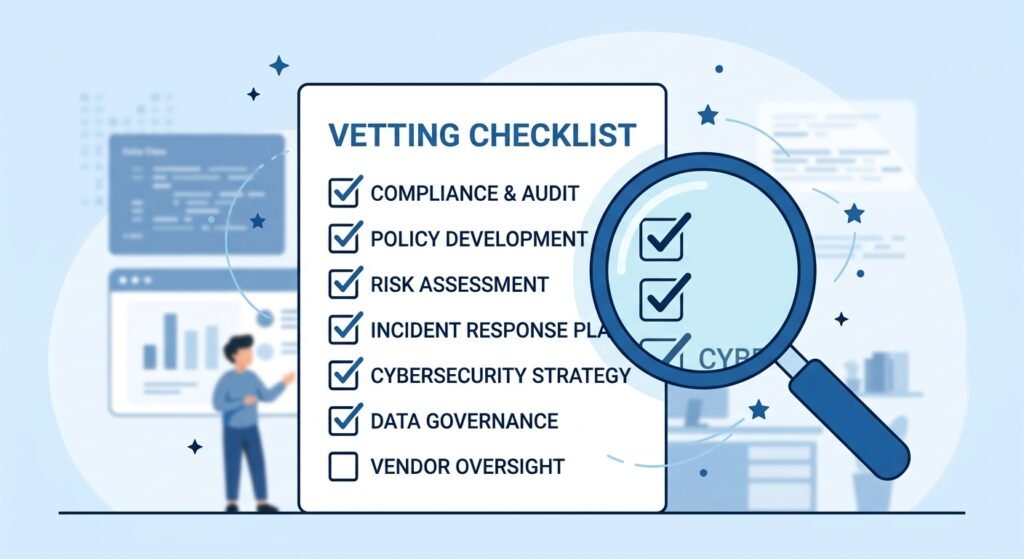
If you decide to hire one, a few questions help separate strong candidates from weak ones:
- What experience do they have in your industry and at your company’s size? Advice that fits a bank may be wrong for a ten-person software startup.
- Can they communicate with non-technical leaders? The best vCISOs explain risk in business terms, not jargon.
- What does the engagement actually include? Ask for clear deliverables, such as a risk assessment, a roadmap, and policies, rather than vague “advisory hours.”
- How do they measure progress? Look for specific milestones and reporting rather than open-ended promises.
- Do they have relevant credentials and references? Certifications like CISSP or CISM, combined with real references from similar clients, are a good sign.
- How will they work with your existing team? A good vCISO strengthens your staff and avoids creating dependence on themselves.
What to Expect in the First 90 Days
Most engagements follow a similar shape. In the first few weeks, the vCISO learns your business, reviews existing systems and policies, and identifies the biggest gaps. By around the second month, you should have a prioritized risk list and a practical roadmap. By the third month, the first improvements are underway, such as stronger access controls, updated policies, or an incident response plan, and leadership has a regular reporting rhythm.
If you’re not seeing clear priorities and visible progress in that window, it’s worth having a direct conversation about scope and expectations.
The Bottom Line
A vCISO gives a growing business access to senior security leadership at a price it can sustain. It’s not a replacement for technical staff, and it’s not necessary for every company. But if customers are asking about your security, no one owns the problem internally, or you’re facing a compliance requirement you don’t know how to approach, a vCISO is often the most practical way to turn security from an unmanaged worry into a plan with owners, priorities, and progress you can measure.
Leave a Reply