
If a customer has ever asked whether your company is “ISO 27001 certified,” you may have nodded politely and then searched for what it means. You’re not alone. The standard is often described in technical language that makes it sound like an IT project. In reality, it’s a business management framework, and you don’t need to be technical to understand it.
Here’s what ISO 27001 is, why it matters, what getting certified involves, and how to decide whether it makes sense for your business.
What Is ISO 27001?
ISO 27001 is an international standard for managing information security. It doesn’t tell you which specific products to buy or which technology to use. Instead, it describes how to build and run a system for protecting your company’s information, called an Information Security Management System, or ISMS.
Think of it the way you might think of a quality management system in a factory. The standard doesn’t make your product for you. It makes sure you have a consistent, documented, repeatable way of managing quality. ISO 27001 does the same for security: it asks you to identify risks, decide how to handle them, put controls in place, and keep checking that they work.
Information here means more than computer files. It covers customer data, financial records, contracts, employee details, intellectual property, and anything else the business needs to protect, whether it’s digital or on paper.
Why Business Owners Care About It
The main reason is trust. Certification is independent proof that your company manages security seriously, rather than just claiming it does.
- Winning deals. Larger customers, government bodies, and enterprise buyers increasingly require suppliers to demonstrate security maturity. Certification can shorten security questionnaires or remove them entirely.
- Opening new markets. Some tenders and contracts list ISO 27001 as a requirement or a strong advantage.
- Reducing risk. The process forces you to find and address weaknesses before an attacker or an auditor does.
- Meeting legal and regulatory expectations. While ISO 27001 isn’t a law, it supports compliance with data protection and privacy requirements.
- Building internal discipline. Clear roles, documented procedures, and regular reviews make security less dependent on one or two people’s memory.
The Core Ideas in Plain English
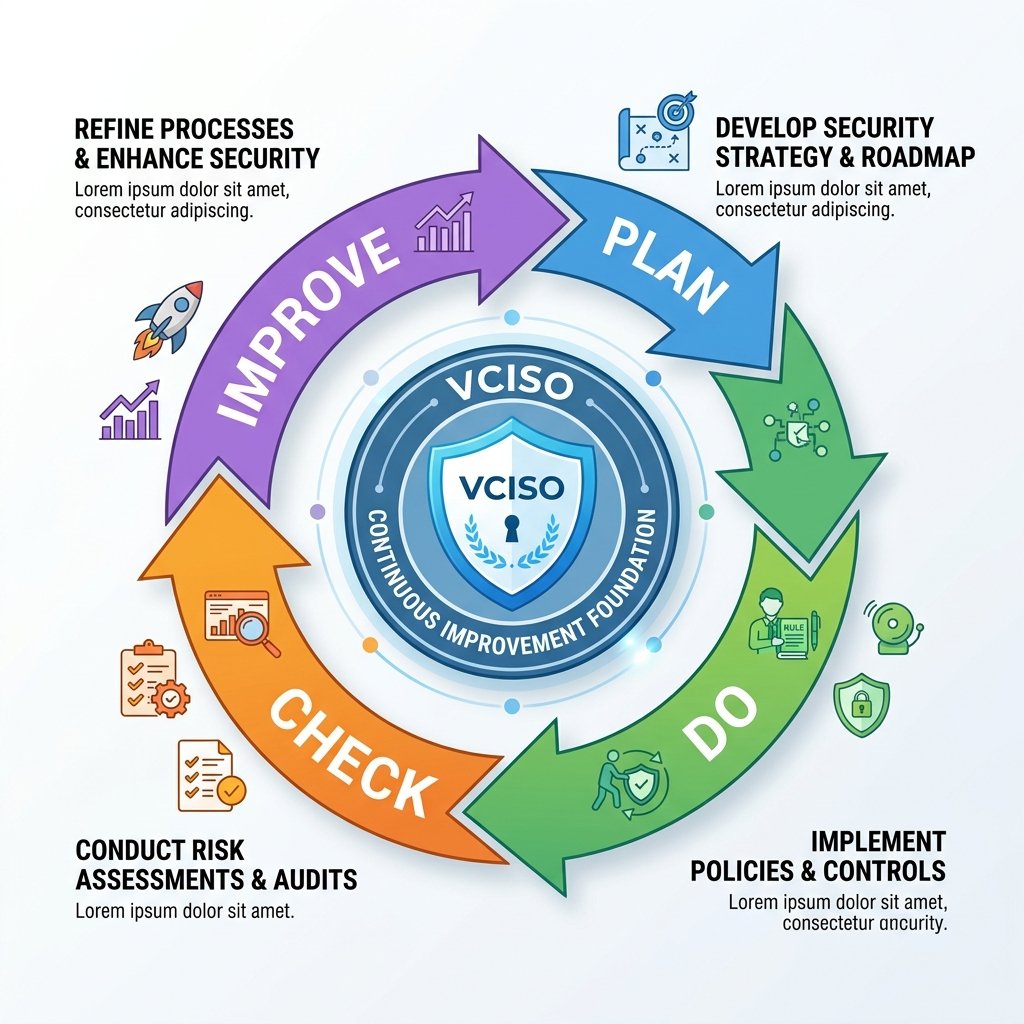
You don’t need to memorize the standard, but a few ideas explain most of it.
1. Risk-based thinking. You start by asking what could go wrong, how likely it is, and how bad it would be. Then you spend effort on the biggest risks first, instead of trying to protect everything equally.
2. Management commitment. Leadership has to take part. The standard expects senior people to set the direction, assign responsibility, and provide the resources. It can’t be handed off entirely to IT.
3. Controls. A control is simply a safeguard. Annex A of the standard provides a reference list of them, covering areas such as access management, employee onboarding and offboarding, supplier relationships, physical security, backups, logging, and incident handling. You choose which ones apply to your risks and explain your reasoning.
4. Documentation. You write down your policies, your risk decisions, and your procedures. Auditors want evidence that what you say you do is what you actually do.
5. Continuous improvement. Security is never “done.” The standard requires regular reviews, internal audits, and corrections, so the system improves over time.
What the Certification Process Looks Like
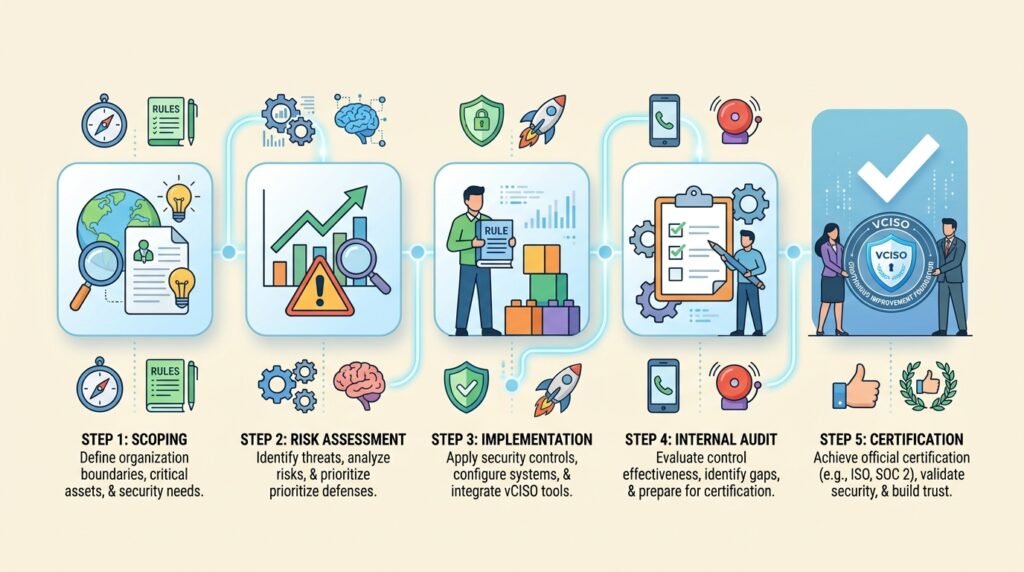
Most organizations follow a similar path:
- Define the scope. Decide which parts of the business, locations, and systems the ISMS will cover. A smaller, well-chosen scope is often faster and cheaper to certify.
- Assess your risks. Identify what information you hold, what threats it faces, and where your current protections fall short.
- Choose and implement controls. Close the gaps by putting policies, processes, and technical safeguards in place.
- Train your people. Staff need to understand their responsibilities, since many security failures come from everyday mistakes.
- Run an internal audit and management review. You check your own system first and leadership formally reviews the results.
- Undergo the external audit. An independent, accredited certification body reviews your documentation in one stage and your actual practice in a second stage.
- Receive certification and keep it alive. Certificates are typically valid for three years, with annual surveillance audits in between to make sure you’re maintaining the system.
How Long Does It Take and What Does It Cost?
Timelines and budgets vary a great deal depending on company size, complexity, and how mature your security already is. As a rough guide, a small business with a clear scope and a motivated team may take several months to be ready, while larger or more complex organizations can take a year or more.
Costs generally fall into a few buckets: the certification body’s audit fees, any consulting or vCISO support you bring in, tools or software you may need to purchase, and, often the largest, the time your own people spend on the work. Because quotes vary widely, it’s worth requesting proposals from several providers and asking exactly what’s included.
Common Misconceptions
- “It’s only for big companies.” Small and mid-sized businesses certify all the time, especially when a customer requires it.
- “It makes us unhackable.” No standard can promise that. Certification shows that you manage risk systematically, not that incidents become impossible.
- “It’s just an IT project.” It involves HR, operations, legal, and leadership as much as IT.
- “We pass once and we’re done.” Surveillance audits and regular reviews mean ongoing effort is part of the deal.
- “It means buying lots of expensive tools.” The standard is about management and process. Many requirements can be met with policies, training, and discipline rather than new software.
How ISO 27001 Compares With SOC 2
Business owners often ask which one they need. In simple terms, ISO 27001 is an internationally recognized certification of your management system, which tends to carry more weight with customers in Europe, Asia, and the Middle East. SOC 2 is an attestation report more common with US technology and software buyers. Some companies pursue both. The right choice usually depends on what your customers and target markets are asking for, so check with your key clients before deciding.
Is It Right for Your Business?

ISO 27001 is worth serious consideration if:
- Customers or prospects are asking for it, or listing it in tenders and contracts.
- You handle sensitive customer or partner data and want to prove you protect it.
- You’re growing and want a structured way to manage security before it becomes unmanageable.
- You operate in industries or regions where it’s widely expected.
It may be premature if you’re very early-stage with little sensitive data and no customer pressure. In that case, starting with the basics, such as multi-factor authentication, backups, employee training, and a simple incident plan, gives you a strong foundation that makes a later certification much easier.
Where to Start
You don’t have to commit to full certification on day one. A practical first step is a gap assessment: a short review that compares what you do today against what the standard expects and shows you how big the journey really is. Many businesses bring in a consultant or a vCISO for this, then decide with real numbers whether to proceed.
ISO 27001 sounds intimidating mostly because of its vocabulary. Once you strip that away, it asks a few straightforward questions: what are you protecting, what could go wrong, what are you doing about it, and how do you know it’s working? If you can answer those honestly and keep answering them as your business changes, you’re already thinking the way the standard intends.
Leave a Reply