For most of OSINT’s history, the basic workflow looked the same regardless of the tool: you ran a search, reviewed the results, and moved on until the next time you thought to check again. That model made sense when the pace of the world roughly matched the pace of a manual search. It doesn’t anymore. Intelligence platform vendors across the industry are describing the same structural shift heading into 2026: the era of search is giving way to the era of stream — from pull to push, from query to monitor, from what happened to what is happening right now.
Here’s what’s actually driving that shift, what it looks like in practice, and what it changes for anyone doing this kind of work.
Why the old search-first model stopped being enough
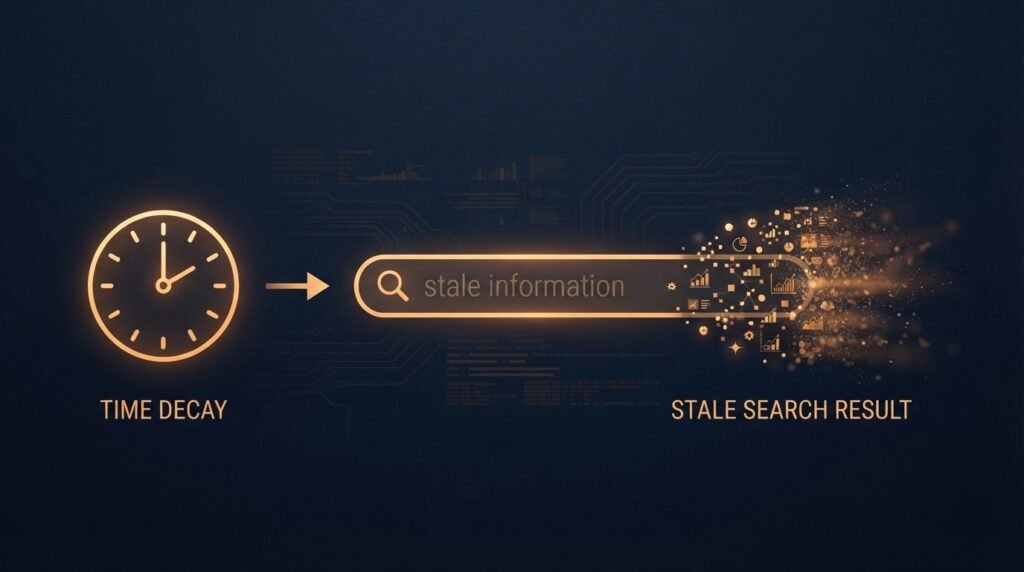
Query-based intelligence gathering was built for a different information environment — one where relevant digital activity was limited and criminal or threat activity was constrained by physical logistics. An investigator who ran a search at the start of a shift and reviewed the results at the end of it was working effectively, because the information was still relevant hours later.
That assumption has broken down. The volume of publicly generated data now moves fast enough that a snapshot taken once a day, or even once an hour, can already be stale by the time it’s reviewed. Platforms still running that search-first architecture against 2026’s information environment aren’t just working with slower tools — they’re working with a fundamentally mismatched paradigm, where the gap between what the platform can see and what’s actually happening widens continuously.
What “streaming” OSINT actually looks like
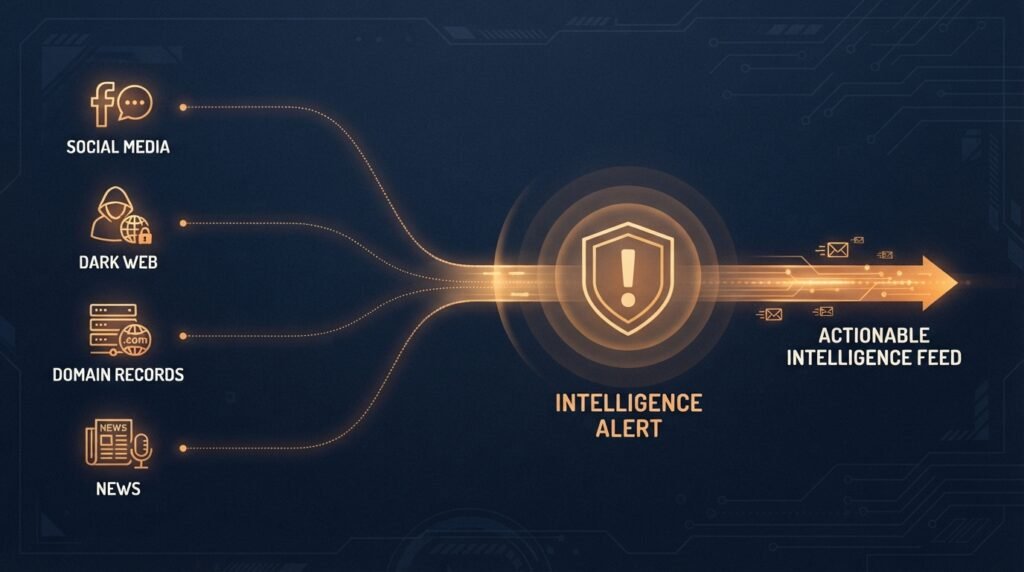
The shift isn’t just about checking things more often — it’s an architectural change in how monitoring works:
- Continuous ingestion instead of scheduled checks. Modern platforms are built to assume the world generates relevant intelligence constantly, and to notify an investigator when something matters, rather than requiring someone to go looking for it.
- Massive scale as the baseline, not the exception. Enterprise threat intelligence providers now describe monitoring tens of millions of organizations simultaneously and ingesting well over a billion newly compromised credentials from the dark web every single week — a volume that has no manual equivalent.
- Agentic AI running targeted, ongoing collection. Rather than a human periodically running the same search, autonomous AI processes now handle continuous, targeted data collection and pass along what meets a relevance or risk threshold.
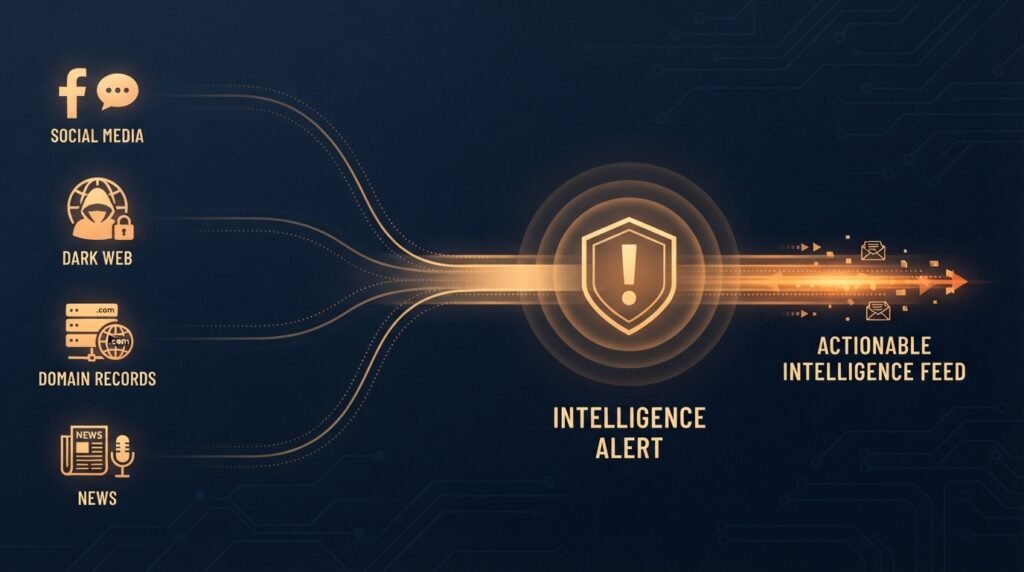
- Fusion across source types. Real-time platforms increasingly correlate open-source data with other intelligence streams simultaneously, rather than treating each source as a separate, manually cross-referenced search.
A real-world example of why this matters
The value of this shift became visible in a very concrete way in early 2026. When U.S. and Israeli strikes against Iran began in late February, commercial air traffic, shipping routes, and internet infrastructure across the region all changed within hours — and most public information sources initially struggled to keep up, offering only fragments and unverified claims. Traditional professional OSINT platforms capable of correlating that many signals simultaneously have historically cost tens of thousands of dollars a year, putting them out of reach for independent analysts and journalists. A free, real-time monitoring platform built specifically to track this kind of unfolding event gained roughly a million users within weeks of launch, and doubled that in a single night once the strikes began — a clear signal of how much demand exists for genuinely real-time, rather than search-driven, intelligence access once it becomes available.
What this changes for investigators
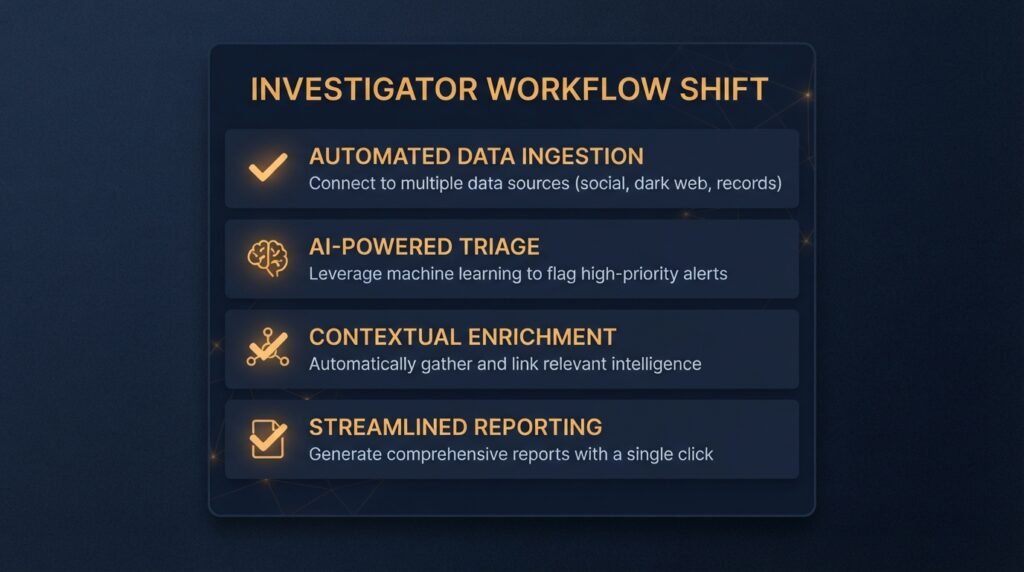
This shift changes the actual shape of the job, not just the tools:
- From researcher to responder. When monitoring is continuous, an investigator’s role shifts toward triaging and validating what’s already been flagged, rather than spending most of their time searching for it in the first place.
- Verification becomes more urgent, not less. As we’ve covered in our post on the human-in-the-loop problem, faster collection doesn’t reduce the need for human judgment — if anything, a constant stream of AI-flagged material raises the stakes on catching what the automation gets wrong, since there’s more of it arriving, faster.
- Standing collection plans matter more than one-off searches. Instead of designing a search for a specific question, teams increasingly need to define ongoing collection priorities in advance, so the continuous stream is actually watching for what matters to them.
- The tooling gap is real, but narrowing. Enterprise-grade real-time correlation used to require expensive, specialized platforms. That’s shifting as more accessible tools reach a wider range of analysts, journalists, and smaller organizations.
The bottom line
OSINT has moved from a discipline built around asking the right question at the right moment to one built around already watching before you know exactly what you’re looking for. That’s a genuine capability upgrade — threats and events surface faster, and monitoring no longer depends entirely on someone remembering to check. But it raises the bar on everything downstream of collection: triage discipline, verification habits, and clear collection priorities matter more, not less, when the volume of incoming material is constant rather than something you requested.
This pairs directly with the themes in our posts on the human-in-the-loop problem in OSINT and how AI is automating early-stage investigations — both worth revisiting as the volume of what’s being monitored keeps climbing.
Leave a Reply