
Help desk is one of the best launchpads into security, and also one of the most underrated. You already talk to users, troubleshoot under pressure, read logs when things break, and see how real environments actually behave. That’s a head start most people trying to break into a SOC don’t have.
What you probably don’t have yet is structure. “Get into cybersecurity” is too big to act on. This is the 12-month roadmap I’d follow if I were making the move from help desk to SOC analyst: broken into quarters, with a clear focus for each stretch and a realistic pace for someone still working a full-time job.
Before You Start: What You Already Have
It’s worth taking stock first, because help desk experience maps to SOC work more than people realize:
- Troubleshooting mindset. Isolating a problem step by step is the core of alert investigation.
- Account and access knowledge. Password resets, permissions, and MFA issues are the same events that show up in security alerts.
- User behavior awareness. You know what normal looks like, which is the baseline every analyst needs to spot abnormal.
- Ticketing and documentation habits. SOC work runs on tickets and clear notes.
Write these down. They’ll feed straight into your resume and interviews later.

Months 1–3: Build the Foundation
The first quarter is about the fundamentals that everything else rests on. Skipping this is the most common mistake career-changers make, because the tools in later months stop making sense without it.
Focus areas:
- Networking basics. TCP/IP, DNS, HTTP/HTTPS, ports and protocols, firewalls, and how traffic flows. If you can read a packet capture and explain what’s happening, you’re ahead of many applicants.
- Operating systems. Windows internals (processes, services, the registry, event logs) and Linux command-line comfort.
- Core security concepts. The CIA triad, common attack types, authentication, encryption basics, and the difference between a threat, a vulnerability, and a risk.
Milestones:
- Study for an entry-level certification such as CompTIA Security+, which covers much of this ground and is widely recognized on SOC job postings.
- Set up a small home lab: a couple of virtual machines you can break and fix without consequences.
- Start a simple learning log where you write down what you studied each week. You’ll use it later.
Months 4–6: Learn How a SOC Actually Works
With the basics in place, shift from general security knowledge to the specific workflow of a SOC.
Focus areas:
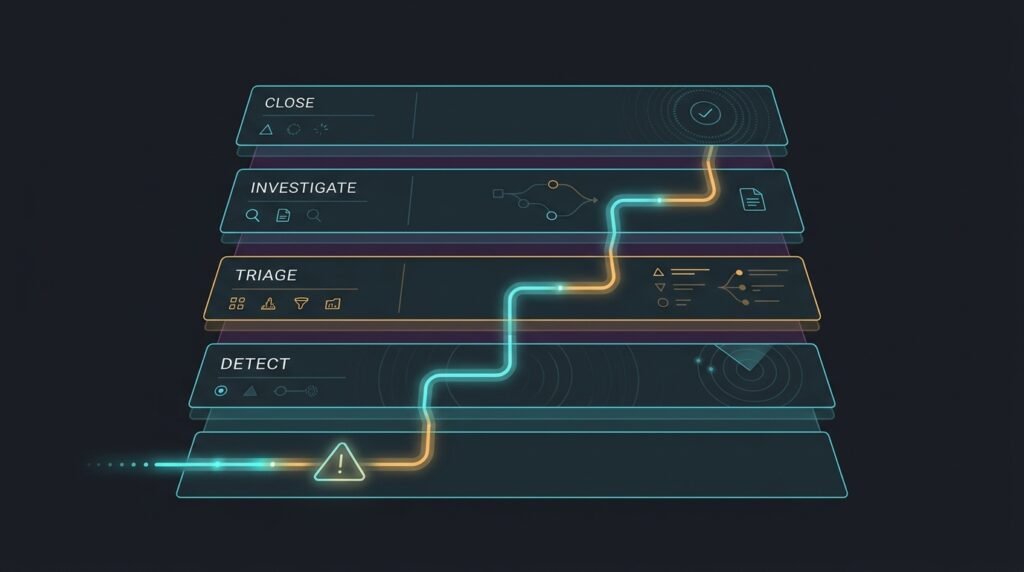
- The alert lifecycle. How alerts are generated, triaged, investigated, escalated, and closed.
- SIEM fundamentals. Learn to search and filter logs in a SIEM. Free tiers and community editions of popular platforms are enough to practice on.
- Log analysis. Reading Windows event logs, firewall logs, authentication logs, and web server logs, and knowing which fields matter.
- Frameworks. Get familiar with the MITRE ATT&CK framework and the incident response lifecycle. They give you shared language with every SOC team.
Milestones:
- Complete a certification or training path focused on blue team skills, if budget allows.
- Work through hands-on, SOC-style practice platforms where you triage simulated alerts. Aim for consistent weekly practice rather than occasional marathons.
- Add a few write-ups to your learning log: take one simulated incident and document what happened, how you found it, and what you’d recommend.
Months 7–9: Get Hands-On and Get Visible
This is the quarter where you move from studying to demonstrating. Hiring managers for entry-level SOC roles care less about how many courses you’ve finished and more about whether you can actually do the work.
Focus areas:
- Detection and investigation practice. Triage phishing emails, analyze suspicious files in a safe sandbox, and trace activity across logs.
- Threat intelligence basics. Learn how to look up indicators, read threat reports, and use open-source intelligence to add context to an alert.
- Scripting. You don’t need to be a developer, but basic Python or PowerShell for parsing logs and automating small tasks is a real differentiator.
Milestones:
- Build two or three portfolio projects: a documented home lab, a detection write-up, or a short investigation report with screenshots and a clear conclusion.
- Publish them somewhere public, like a personal blog or a code-hosting profile, with sensitive details left out.
- Start engaging with the security community: forums, local meetups, and professional networks. Referrals matter in this field.
- Ask your current employer whether you can shadow or assist the security team, or take on any security-adjacent tasks, such as reviewing phishing reports or helping with access reviews.
Months 10–12: Apply, Interview, and Land the Role
The final quarter turns everything into an actual offer.
Focus areas:
- Resume and profile. Rewrite your resume to lead with security-relevant experience from your help desk work. Translate tasks into SOC language: “resolved account lockouts” becomes “investigated authentication issues and identified suspicious access patterns.”
- Interview preparation. Expect scenario questions like “walk me through how you’d investigate a suspicious login” or “what would you do if you received a phishing report.” Practice talking through your process out loud.
- Targeted applications. Look at Tier 1 SOC analyst, security operations associate, and junior security analyst roles, and also at managed security service providers, which often hire and train entry-level analysts in volume.
Milestones:
- Apply consistently each week rather than in bursts.
- Do mock interviews with a friend or a mentor.
- Keep studying: a second certification or a deeper skill, like cloud security or incident response, keeps momentum going while you wait for responses.

A Realistic Weekly Rhythm
Twelve months is achievable alongside a full-time job if you keep the pace sustainable. A rough weekly structure that works for many people:
- 3–4 evenings, about an hour each, on structured study or hands-on labs
- One longer weekend session for a lab project, a write-up, or a practice investigation
- A short weekly review, updating your learning log and noting what’s clicking and what isn’t
Consistency beats intensity here. A steady hour a day for a year outperforms a burst of enthusiasm that burns out in six weeks.
Common Pitfalls to Avoid
- Collecting certifications without hands-on practice. Certs open doors, but interviews test whether you can actually work through an alert.
- Skipping the fundamentals. Jumping straight into advanced tools without networking and OS basics leaves you memorizing steps you don’t understand.
- Waiting until you feel ready. Most people apply before they feel fully prepared. Start applying around month nine or ten, even if you think you need more time.
- Going it alone. Mentors, study groups, and community connections shorten the path considerably.
The Bottom Line
The move from help desk to SOC analyst isn’t a leap. It’s a series of deliberate steps, and you’re already standing on the first one. Build the fundamentals, learn how a SOC really runs, prove your skills with real projects, then go after the role with a clear story about why your help desk background makes you a stronger candidate. Twelve months is enough time to get there if you start now and stay consistent.
Leave a Reply