Cyber insurance used to be an easy thing to put off — a “someday” line item most small businesses never got around to. That’s changed. Attacks on small businesses have grown steadily, breach costs are real money even at the low end, and insurers themselves have shifted from a nice-to-have pitch to something closer to a security requirement with a policy attached.
Here’s what cyber insurance actually covers, what it costs in 2026, why qualifying has gotten harder, and how to decide whether your business actually needs it.
What cyber insurance actually covers
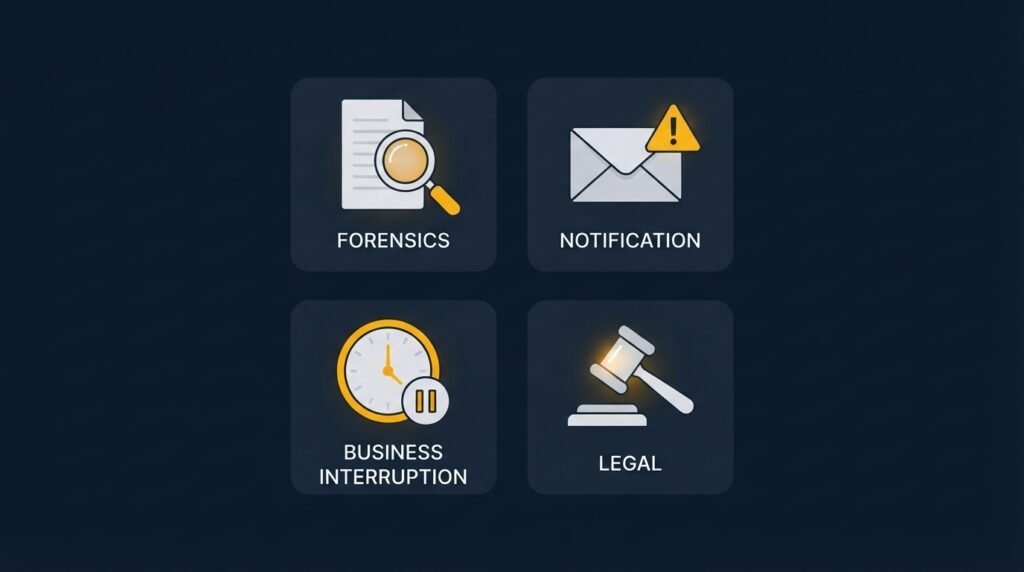
A common misconception trips up a lot of business owners: general liability insurance does not cover cyber incidents. If a ransomware attack encrypts your files or a hacker steals customer data, a standard business policy almost never responds to that. Cyber insurance is typically a separate policy, or an added endorsement, built specifically for this risk. It generally covers two categories:
First-party costs — the direct expenses to your own business:
- Forensic investigation to determine what happened and what was accessed
- Data recovery and system restoration
- Business interruption losses while you’re down
- Ransom negotiation and, often, the ransom payment itself
- Customer notification and credit monitoring costs
Third-party costs — claims against you from others affected:
- Legal defense if customers or partners sue over the incident
- Regulatory fines and penalties tied to data protection laws
- Settlements related to the breach
What it typically does not cover: reputational damage, incidents you already knew about before buying the policy, and losses from intentional acts by someone inside your own company.
What it actually costs in 2026

Pricing varies more than most other business insurance, because it’s tied so closely to your specific risk profile. As a general range, most small businesses pay somewhere between $1,200 and $3,500 per year for around $1 million in coverage, though low-risk sole proprietors can pay less and businesses in higher-risk categories — healthcare, financial services, technology — often pay noticeably more. The biggest factors insurers weigh are your revenue and employee count, the type of data you handle, your industry, and critically, what security controls you already have in place.
Why qualifying has gotten harder
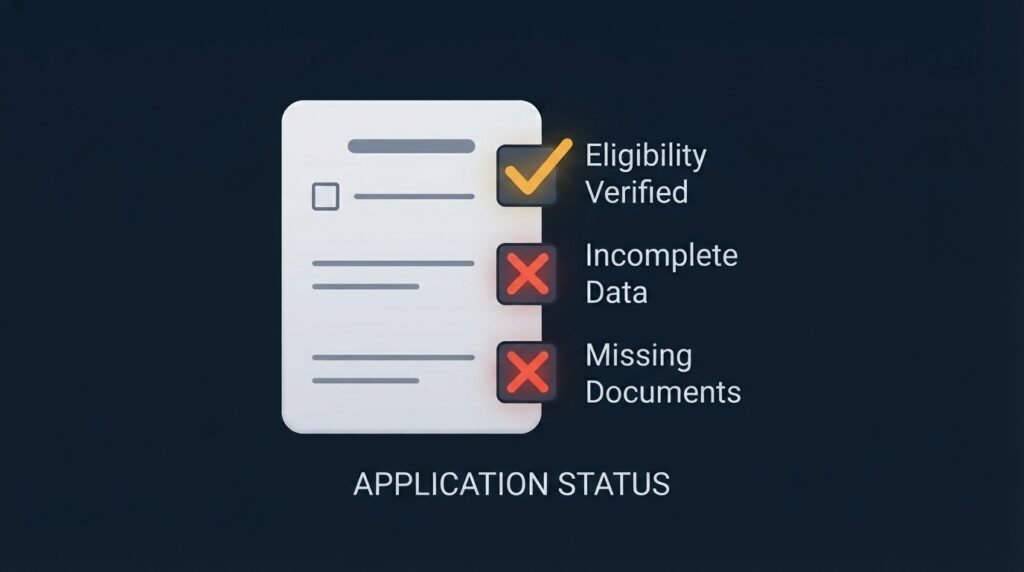
This is the part that’s changed the most. A few years ago, buying cyber insurance mostly meant filling out a questionnaire. Today, insurers act more like security auditors before they’ll even quote you a price. After a wave of large claim payouts, carriers tightened underwriting significantly, and a meaningful share of small business applicants now get denied outright or hit with steep premium increases if their security controls fall short.
The baseline requirements insurers commonly expect now include:
- Multi-factor authentication on email, remote access, and administrative accounts — this is the single most common reason applications get denied or claims get rejected.
- Endpoint detection and response (EDR), a more active form of antivirus/endpoint protection that monitors for suspicious behavior, not just known malware.
- Tested, offline or off-site backups that can’t be reached and encrypted by the same ransomware hitting your live systems.
- A documented incident response plan, even a simple one, showing you have a process rather than a plan to improvise.
If you don’t have these in place, it’s worth addressing them before applying — a denial on record can make it harder to get coverage elsewhere, and going in prepared often means a meaningfully lower premium for the same coverage.
So, do you actually need it?
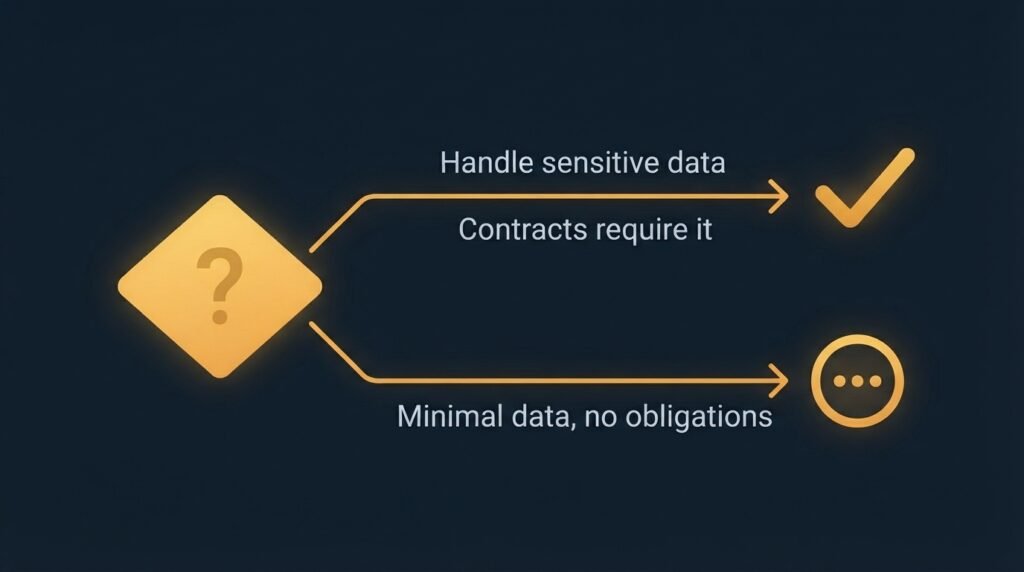
A few honest signals point toward yes:
- You store customer data — payment information, health records, personal details — that would trigger notification obligations if exposed.
- A client or contract requires it. Increasingly, larger clients and government contracts require proof of cyber coverage before they’ll sign, making this a practical cost of doing that business rather than an optional add-on.
- You couldn’t absorb a five- or six-figure hit. If a breach costing tens of thousands of dollars — a realistic outcome even for a small incident — would seriously damage your business, insurance is covering exactly that gap.
- You accept card payments or operate under industry regulation. Non-compliance penalties from card networks or regulators are often easier to manage with coverage backing your response.
Where it’s a closer call: a very small, low-data-footprint business — say, a solo consultant with no stored customer data and minimal digital footprint — may reasonably decide the premium isn’t worth it yet, though even that calculation is shifting as attacks increasingly target small operations regardless of size.
The bottom line
Cyber insurance isn’t a replacement for good security practices, and insurers have made that explicit by requiring those practices as a condition of coverage in the first place. But for most small businesses handling customer data, operating under any contractual or regulatory obligation, or simply unable to absorb a mid-five-figure loss out of pocket, it’s a genuinely reasonable piece of risk management — not a nice-to-have you can indefinitely postpone.
The security controls insurers now require — MFA, tested backups, basic endpoint protection, an incident response plan — are the same fundamentals covered in the Small Business Cybersecurity Risk Checklist. Getting those in place doesn’t just reduce your actual risk; it’s often the difference between qualifying for affordable coverage and not qualifying at all.
Leave a Reply