
Ask anyone who’s actually worked a SOC shift what their day looks like, and you’ll rarely hear about a single dramatic breach. The real story is quieter and more relentless: a steady stream of alerts, most of them low-grade, some of them urgent, all of them competing for attention against a backlog that never quite hits zero. Here are ten attack types that show up on a SOC analyst’s screen on an almost daily basis — not the rare headline-grabbing incidents, but the everyday grind that defines the job.
1. Phishing Emails Targeting Employees
Phishing remains the most common entry point into most organizations, and it never really stops. A typical day brings a mix of generic mass-phishing attempts, more convincing spear-phishing emails targeting specific employees, and the occasional lookalike domain impersonating a vendor or executive. Analysts spend a meaningful chunk of their day triaging reported emails, checking sender reputation, and deciding which ones need a broader warning sent to staff.
2. Credential Stuffing Attempts
Whenever a new batch of leaked usernames and passwords surfaces from an unrelated breach, attackers automatically test those same credentials against other services — banking on the fact that people reuse passwords. SOC teams routinely see spikes of failed login attempts from unusual locations or IP ranges, and part of the daily grind is distinguishing a genuine credential-stuffing wave from ordinary login noise.
3. Brute-Force Login Attempts
Related but distinct from credential stuffing, brute-force attempts hammer a specific login endpoint — VPN portals, admin panels, remote desktop services — with large volumes of password guesses. These are often automated and unsophisticated, but they’re persistent enough that “block another brute-force source IP” is a near-daily ticket in most SOC queues.
4. Malware Droppers and Suspicious Attachments
Every day brings a fresh wave of malicious attachments and links designed to quietly install a foothold — often a lightweight “dropper” that, if successful, downloads a larger payload later. Endpoint detection tools flag a steady trickle of these, and analysts have to quickly determine whether a flagged file was blocked cleanly or whether it executed before detection kicked in.
5. Command-and-Control (C2) Beaconing
When malware does slip through, it typically tries to “phone home” to an attacker-controlled server at regular intervals. Spotting this kind of beaconing — a device quietly reaching out to an unfamiliar external address on a suspicious schedule — is one of the clearest signals that something has already gotten a foothold, and it’s a pattern SOC teams watch for constantly.
6. Suspicious Lateral Movement Inside the Network
Once an attacker has a foothold, the next step is usually trying to move sideways — accessing other machines, escalating privileges, or probing internal systems they shouldn’t have a reason to touch. Analysts look for the telltale signs: an account logging into systems outside its normal pattern, unusual use of administrative tools, or access attempts that don’t match a person’s normal role.
7. Insider-Related Data Exposure
Not every alert involves an outside attacker. A surprising share of daily SOC work involves employees — usually accidentally, sometimes not — moving sensitive data somewhere it shouldn’t go: uploading files to personal cloud storage, emailing documents to a personal address, or misconfiguring sharing permissions on an internal file. These cases require a different kind of judgment than a clear-cut external attack.

8. Exposed Cloud Storage and Misconfigurations
Cloud environments change fast, and misconfigurations — an open storage bucket, an overly permissive access policy, a forgotten test server exposed to the public internet — are discovered constantly, both by internal scans and by the same automated scanners attackers use. A meaningful part of daily SOC work is closing these gaps before someone else finds them first.
9. Typosquatting and Look-Alike Domains
Attackers regularly register domains that closely mimic a company’s real one — swapping a letter, adding a hyphen, using a different top-level domain — to use in phishing campaigns or fake login pages. SOC and brand-protection teams routinely spot new look-alike domains popping up and have to decide which ones are threatening enough to pursue a takedown request for.
10. Third-Party and Supply Chain Alerts
Modern organizations depend on dozens or hundreds of vendors, and a breach or vulnerability at any one of them can become the SOC’s problem too. A big part of the daily routine now involves monitoring third-party risk feeds and vendor security postures — tracking which partners have been flagged for exposed credentials, known vulnerabilities, or active incidents that could spill over.
Why This List Matters More Than It Looks
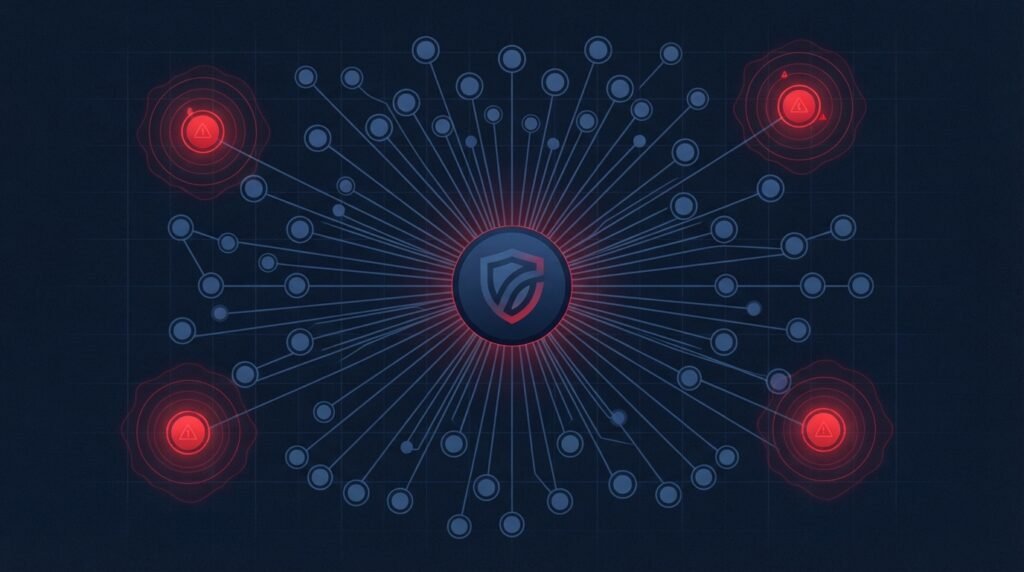
None of these ten attacks are exotic. That’s precisely the point. The vast majority of a SOC analyst’s day isn’t spent chasing a sophisticated nation-state actor — it’s spent triaging this same rotating cast of everyday threats, over and over, while trying not to miss the one alert buried in the noise that turns out to matter. Alert fatigue is real, and it’s arguably a bigger operational risk to most organizations than any single attack type on this list.
This is exactly why the current wave of AI-assisted threat intelligence and extended detection platforms has focused so heavily on cutting through noise — correlating alerts across dark web monitoring, credential-leak detection, attack-surface scanning, and third-party risk into fewer, more context-rich signals instead of ten separate low-priority tickets. For a SOC analyst, the goal was never “detect more” — it was always “spend less time deciding what actually deserves attention.”
Coming up next in this series: a closer look at how extended threat intelligence platforms are trying to solve the alert-fatigue problem — and what that means for the future of the SOC analyst role.
Leave a Reply