
If you’re past 30 and thinking about moving into cybersecurity, you’ve probably wondered whether you’ve missed the window. You haven’t. Cybersecurity is one of the few technical fields where people from other backgrounds are not just accepted but actively valued, and many of the best practitioners started somewhere else entirely.
Here’s a realistic, step-by-step way to make the move, including how to use the experience you already have instead of starting from zero.
Why Starting After 30 Is an Advantage, Not a Handicap
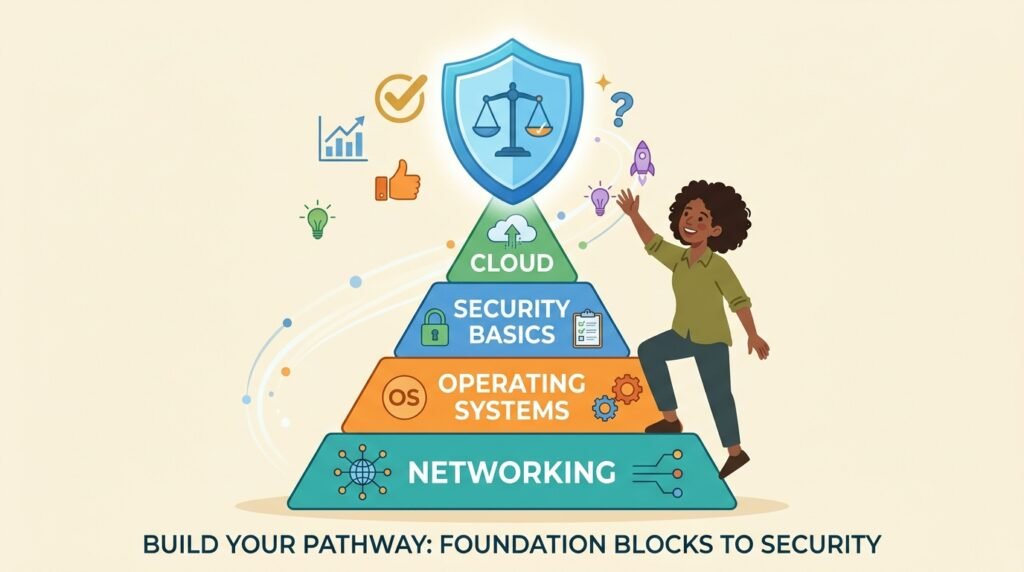
Security is as much about judgment, communication, and understanding how businesses work as it is about technical skill. Career changers often bring exactly those strengths:
- Professional maturity. You know how to work in teams, handle pressure, and deal with difficult stakeholders.
- Domain knowledge. Experience in finance, healthcare, law, retail, education, or operations helps you understand what actually needs protecting and why.
- Communication skills. Security teams constantly need people who can explain risk clearly to non-technical colleagues.
- Reliability. Employers value people who show up consistently and finish what they start.
Many hiring managers will tell you that technical skills can be taught more easily than judgment and professionalism.
Step 1: Understand the Different Paths
Cybersecurity isn’t one job. It’s a collection of roles, and some fit career changers much better than others. A few common entry points:
- SOC analyst. Monitoring alerts, investigating suspicious activity, and escalating incidents. A popular first role.
- GRC (governance, risk, and compliance). Policies, audits, risk assessments, and frameworks like ISO 27001 and SOC 2. Often a strong fit for people from business, legal, audit, or project management backgrounds.
- Security awareness and training. Teaching employees about phishing and safe practices. Suits people with teaching, HR, or communications experience.
- Vulnerability management. Finding, prioritizing, and tracking weaknesses in systems. Good for those with IT or sysadmin backgrounds.
- Penetration testing and red teaming. Ethically attacking systems to find flaws. Technically demanding and usually not a first role, but a great long-term goal.
- Cloud and application security. A fit for developers or cloud engineers moving sideways.
- Security project or program management. A match for experienced project managers.
Spend a week or two reading job descriptions and watching “day in the life” videos before choosing a direction. It’s far easier to study when you know where you’re headed.
Step 2: Build Foundations Before Specializing
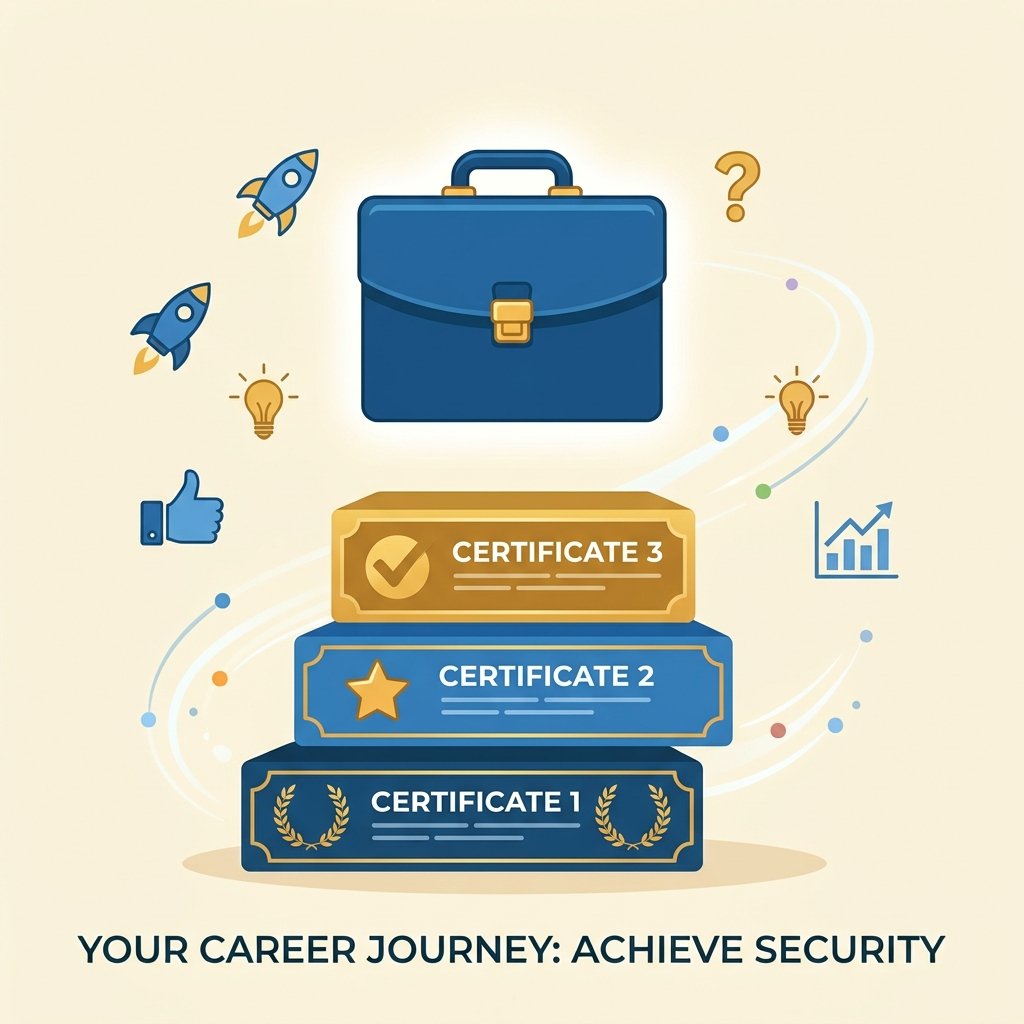
Regardless of path, a few fundamentals show up everywhere:
- Networking basics. How the internet works, IP addresses, DNS, ports, firewalls, and common protocols.
- Operating systems. Comfort with Windows and Linux, including the command line.
- Core security concepts. The CIA triad (confidentiality, integrity, availability), authentication versus authorization, encryption, and common attack types like phishing, malware, and ransomware.
- Cloud fundamentals. Basic understanding of how services like AWS, Azure, or Google Cloud are structured.
- Frameworks. A first look at MITRE ATT&CK, the NIST Cybersecurity Framework, and ISO 27001, to learn the common language of the field.
You don’t need to master everything. You need enough to speak the language and learn faster on the job.
Step 3: Pick Learning Resources That Fit Your Life
Most people changing careers are doing it alongside a job and family, so efficiency matters.
- Structured courses. Beginner-friendly programs from major training platforms offer a clear path and a sense of progress.
- Free resources. Plenty of high-quality videos, written guides, and community-run lessons are available at no cost, and they’re a good way to test your interest before spending money.
- Hands-on practice platforms. Browser-based labs and “capture the flag” style challenges let you practice real techniques in safe, legal environments.
- A home lab. Setting up a couple of virtual machines to experiment with is inexpensive and teaches more than reading alone.
Aim for consistency over intensity. Five or six hours a week sustained for several months beats occasional marathon weekends.
Step 4: Consider Certifications Strategically
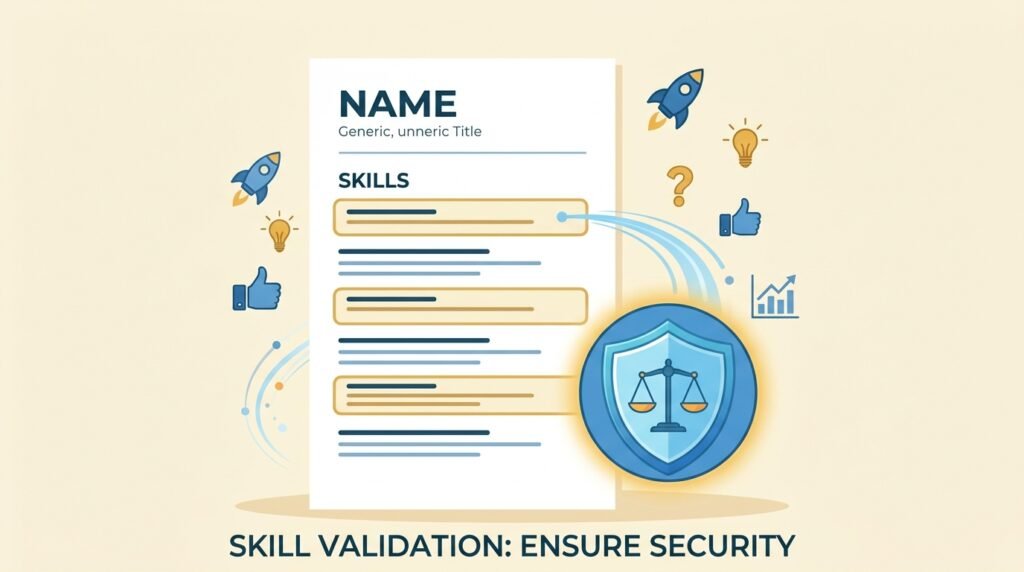
Certifications can help a career changer by giving employers a recognizable signal when you don’t have a security job on your resume yet. They aren’t magic, but they open doors.
- Entry level: CompTIA Security+ is widely recognized and frequently listed in job postings. Google’s Cybersecurity Certificate and ISC2’s Certified in Cybersecurity (CC) are also approachable starting points.
- Defensive and SOC focus: CompTIA CySA+ and similar blue-team credentials.
- GRC and management focus: CISA, CISM, and later CISSP, which generally require some work experience.
- Offensive security: Certifications like PNPT or OSCP are respected but demanding, and better suited to those with solid technical foundations.
Check current requirements, costs, and exam formats on the official sites before committing, since these change. And don’t collect certificates indefinitely. One or two relevant ones paired with real practical evidence usually beats a long list.
Step 5: Build Proof You Can Actually Do the Work
Employers hiring someone without a security title want evidence of skill and initiative. Create it deliberately:
- Document your labs and projects. Write short posts or a simple portfolio explaining what you built, what you learned, and what went wrong.
- Practice on legal platforms. Completing challenges and keeping notes on your approach shows both skill and curiosity.
- Write about what you’re learning. A small blog or a series of posts demonstrates communication ability, which is a rare strength.
- Contribute to the community. Answer questions in forums, join local security meetups, or help with open-source projects.
- Use your current job. Volunteer to help with security-adjacent tasks at work, such as reviewing access permissions, helping with a policy, or supporting a compliance audit. This creates genuine experience.
Step 6: Reframe Your Resume and Story
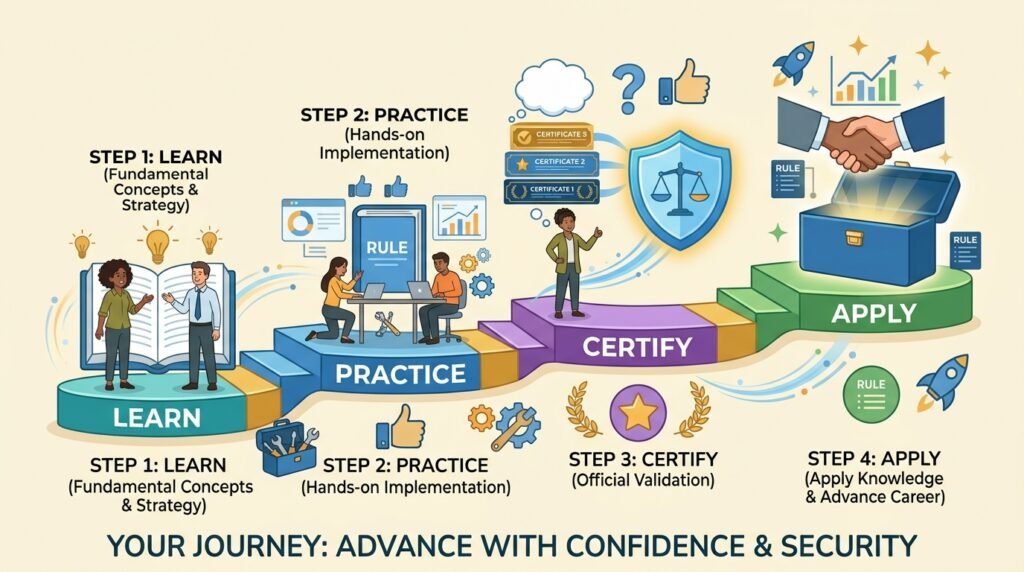
Don’t hide your previous career. Connect it to security.
- A former accountant understands financial controls, fraud, and audits, which maps naturally to GRC and risk.
- A nurse or healthcare worker understands privacy rules and patient data, which helps in healthcare security.
- A teacher can build excellent security awareness programs.
- A customer support professional is often strong at incident communication and triage.
- A systems administrator or developer already has a technical head start.
Rewrite your resume to emphasize transferable skills: analysis, risk awareness, documentation, communication, and problem-solving. Lead with your security learning, certifications, and projects, then show how your past experience supports them. In interviews, tell a clear story about why you’re making the move and what you’ve done to prepare.
Step 7: Network and Apply Smartly
Many entry-level security roles are filled through connections and referrals as much as through job boards.
- Join local and online communities. Security meetups, conference events, and professional groups are friendly places to learn and meet people.
- Talk to people in the roles you want. Short informational conversations teach you what the work is really like and sometimes lead to introductions.
- Apply widely, including adjacent roles. IT support, help desk, and system administration can be stepping stones into security teams, especially at smaller companies.
- Consider internal moves. If you’re already employed at a company with a security team, transferring internally is often easier than applying from outside.
- Be patient with entry-level hunting. The market for beginners is competitive, and a thoughtful, steady search usually works better than sending hundreds of generic applications.
A Realistic Timeline
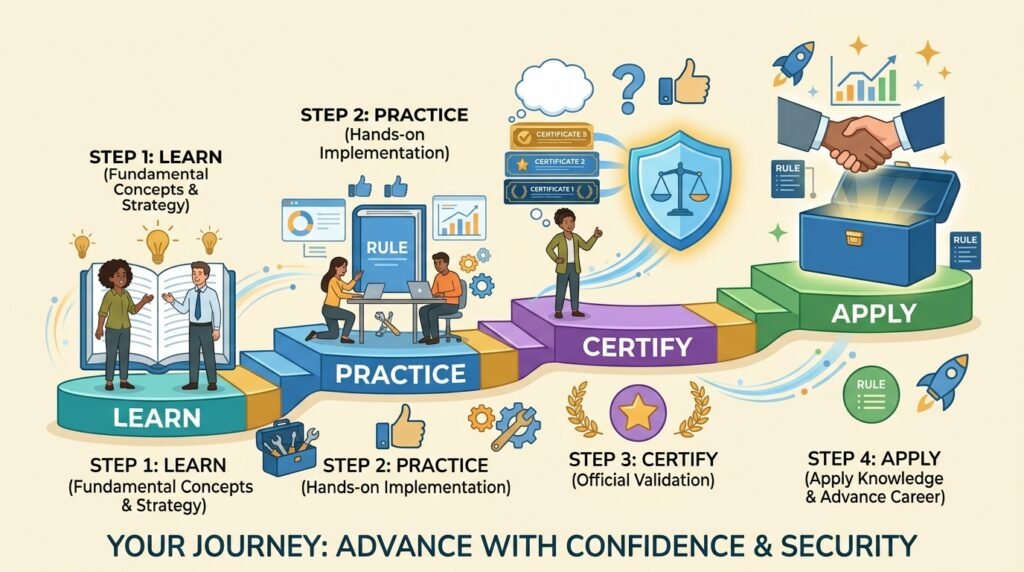
Timelines vary, but a reasonable pattern for someone studying part-time looks like this:
- Months 1–3: Explore roles, learn fundamentals, and start hands-on labs.
- Months 4–6: Deepen skills in your chosen path, work toward a first certification, and begin documenting projects.
- Months 6–9: Polish your resume, build your network, and start applying.
- Months 9–18: Interview, learn from rejections, and land a first role or an adjacent stepping-stone position.
Some people move faster, especially with relevant experience, and some take longer. What matters is steady progress.
Common Mistakes to Avoid
- Trying to learn everything at once. Pick a direction and go deep enough to be useful.
- Collecting certificates without practical work. Proof of skills matters as much as credentials.
- Aiming only at the most glamorous roles. Penetration testing gets the attention, but many fulfilling careers are in defense, risk, and compliance.
- Ignoring soft skills. Writing, explaining, and collaborating are daily requirements.
- Giving up after early rejections. Entry into the field often takes multiple attempts, and each one teaches you something.
- Doing anything unauthorized. Only practice on systems and platforms you own or have explicit permission to test. Ethics and legality are fundamental to this profession.
Final Thoughts
Switching into cybersecurity after 30 is not only possible, it’s common, and your earlier experience can be a genuine advantage. Choose a path that fits your strengths, build solid fundamentals, prove your skills with real projects, and tell a clear story about why your background makes you valuable. The field needs people who bring different perspectives, and the best time to start is whenever you decide to take the first step.
Leave a Reply