Quick answer: Journalism verification has shifted from instinct to process. A reporter working a tip in 2026 has access to tools that would have required a full-time researcher a decade ago, reverse image search, metadata analysis, geolocation, document forensics, and source-identity lookup. Open-source intelligence, OSINT, has become the backbone of professional verification, but the strongest newsrooms still pair it with the oldest technique in the craft: calling the source directly.
Here’s how reporters actually verify what crosses their screen now, the structured framework behind it, and where AI tools genuinely help and where they still get it wrong.
Why “basic search and intuition” stopped being enough
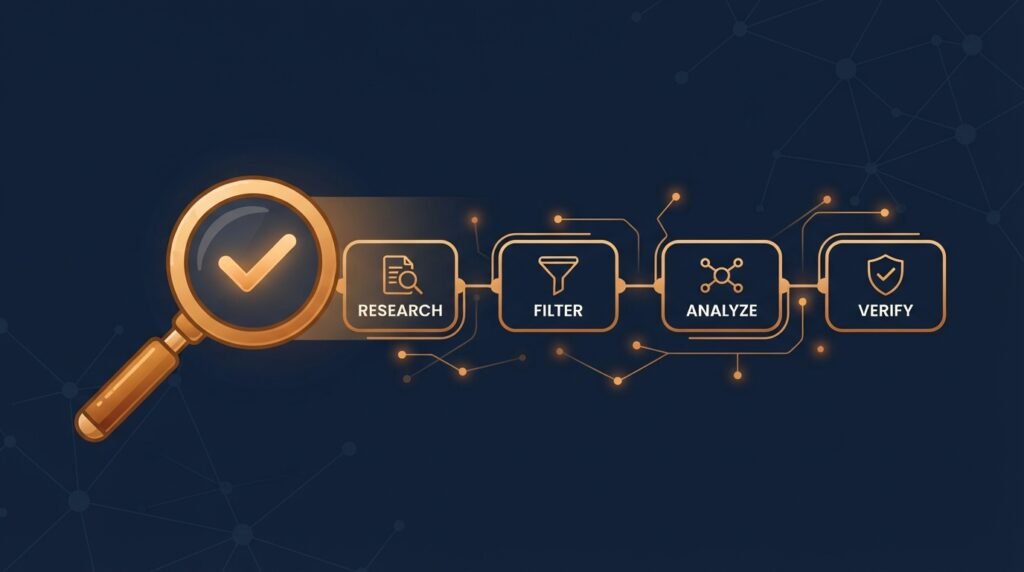
For most of journalism’s history, verification meant checking a fact against a known reliable source and trusting an experienced reporter’s gut sense of what looked right. That approach is no longer sufficient against the scale and sophistication of what circulates online today, synthetic images, recycled footage relabeled as breaking news, and coordinated accounts amplifying the same unverified claim until it looks independently confirmed. Journalism has always relied on open sources; what’s changed over the last fifteen years is the depth and structure of what’s now publicly queryable, and the fact that verification increasingly needs to be a repeatable process, not a one-off judgment call.
The five-minute triage every claim should pass through
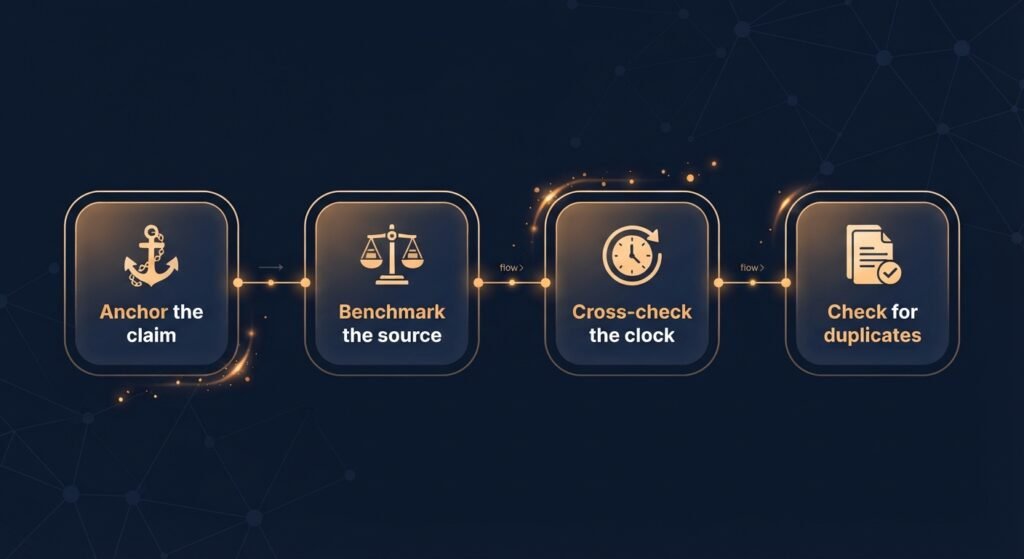
Before any deeper tool gets opened, experienced verification practitioners run a fast initial pass:
- Anchor the claim. Define the exact statement being made, the smallest version of it that can actually be proven true or false, rather than verifying a vague impression of the story.
- Benchmark the source. Is this the original witness or primary account, or an aggregator repeating someone else who repeated someone else?
- Cross-check the clock. Do the timestamps actually line up with the event being described, accounting for time zones, daylight saving shifts, and local holidays that can throw off a casual read of a date?
- Check for duplicates. Is this genuinely new, or old footage resurfacing under a fresh headline, a pattern that fools far more readers than outright fabrication does?
This quick pass catches a surprising share of false claims before any specialized tool is even needed, and it’s the same discipline that underlies everything that follows.
Visual verification: images and video
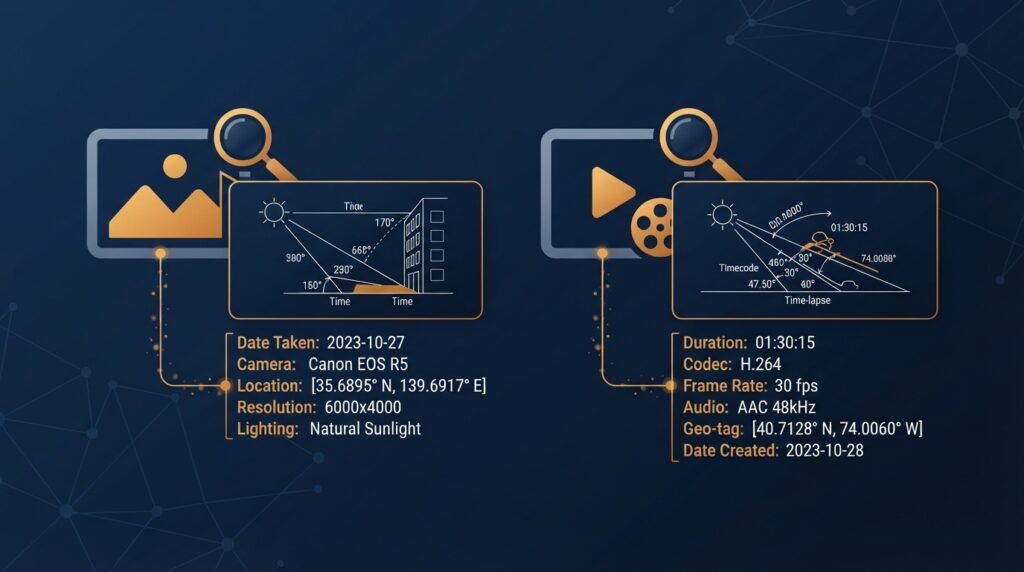
Images and video spread faster than text, which makes visual verification one of the highest-leverage skills a reporter can build:
- Reverse image search checks whether a photo has appeared online before, in a different context or at an earlier date, catching recycled content, which remains far more common than fully synthetic fakes.
- Metadata analysis, using tools like ExifTool, examines a file’s embedded camera, timestamp, and sometimes GPS data to confirm or challenge a claim about when and where it was created.
- Chronolocation, mapping a shadow’s angle against sun-position tools, can confirm or rule out a claimed date and location with real precision, the same technique covered in our post on GEOINT for beginners.
- Dedicated verification plugins, such as the WeVerify toolkit built out of the InVID project, bundle several of these checks into one browser-based workflow built specifically for newsroom use.
Source verification: who’s actually behind the claim

Verifying the content is only half the job. Verifying who’s actually providing it matters just as much, especially for a tip from an unfamiliar or anonymous source:
- Professional registries, such as searchable state bar directories for legal sources, which publish admission dates, standing, and disciplinary history.
- Published writing, checking whether a claimed expert has an academic or policy publication record consistent with their stated background.
- Identity and digital footprint tools built specifically for journalists, which can trace an email address, phone number, or username back to a broader public footprint, useful for confirming a source is who they claim to be, or unmasking a coordinated campaign running through multiple fake accounts.
Where AI genuinely helps, and where it still fails
This is worth being direct about: AI has not solved fact-checking. It has created genuinely useful tools for specific tasks, document-heavy analysis, research synthesis, image-pattern flagging, while simultaneously introducing new categories of error, confident, fluent fabrications that read as authoritative even when they’re wrong. One piece of independent testing is a useful cautionary data point: AI research tools evaluated against expert-authored literature reviews correctly identified less than 6% of the papers the human experts had actually cited. That gap is exactly why, as covered in our post on the human-in-the-loop problem, AI output in a verification workflow needs to be treated as a lead to check, never a finding to publish on its own.
The tools that hold up best tend to do one narrow thing well rather than claim to verify everything. Google’s Fact Check Explorer, for instance, doesn’t fact-check claims live, it indexes what credentialed fact-checking organizations have already reviewed, which makes it a strong early-stage check before deeper OSINT work begins, not a replacement for it. Document-analysis tools built specifically for journalism, such as Google Pinpoint, are useful for large document sets, leaks, FOIA releases, discovery productions, precisely because they’re scoped to a specific, well-defined task.
Why digital tools don’t replace the phone call

Verification trainers consistently make the same point from direct experience: the most robust verification combines digital tools, reverse image search, comment-section review, geolocation, with the oldest technique in journalism, reaching out to sources directly. A geolocation confirms where a video was filmed. It doesn’t confirm why something happened, who’s responsible, or the context surrounding it, questions that still require a human conversation. OSINT leans on technical traces, domain data, metadata, infrastructure, while traditional journalism leans on human sources and relationships; the strongest reporting draws on both rather than treating one as a replacement for the other.
A practical free toolkit
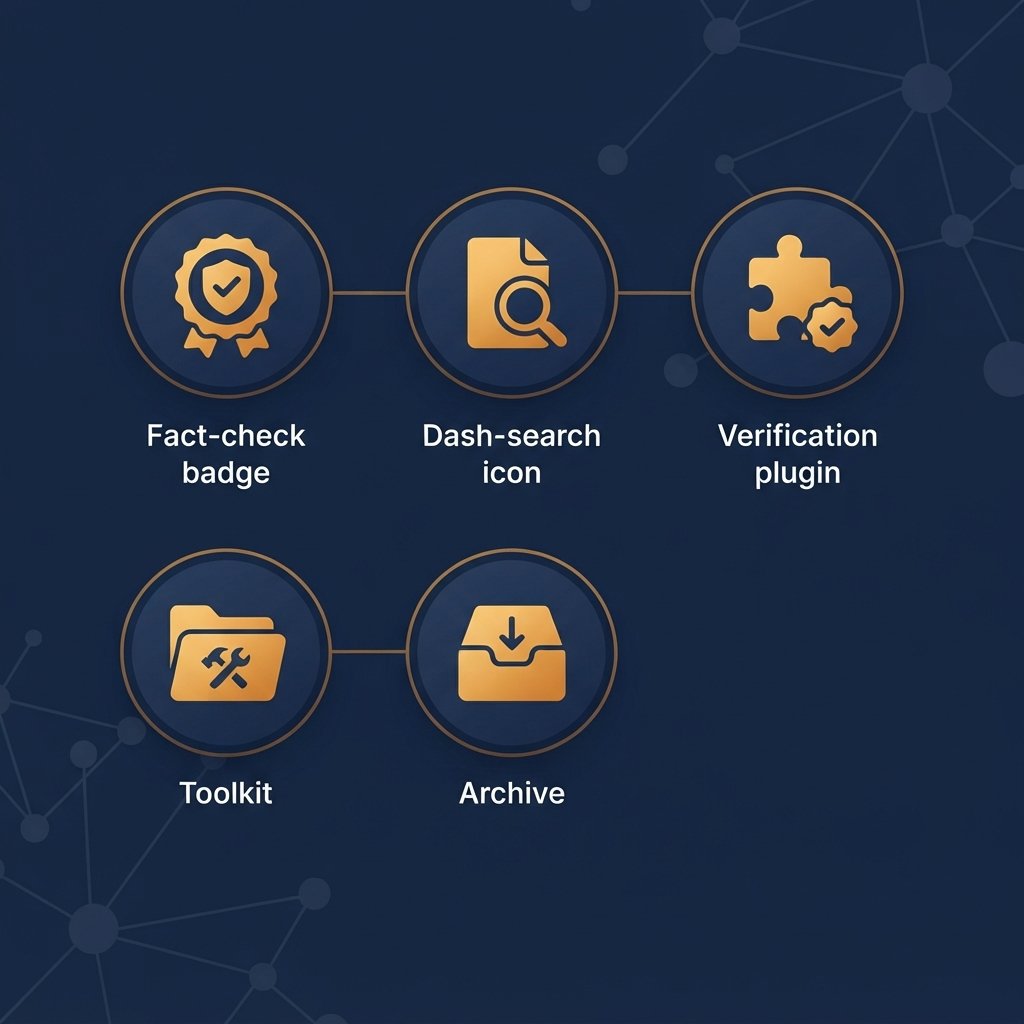
A reasonable starting stack, most of it free and already used across newsrooms:
- Google Fact Check Explorer, for checking whether a claim has already been reviewed by a credentialed fact-checker.
- Google Pinpoint, free for journalists, for document-heavy investigation and verification.
- WeVerify / InVID browser plugin, for bundled image and video verification checks.
- Bellingcat’s Online Investigations Toolkit, a long-maintained, free directory of hundreds of geolocation, social-data, and verification tools, in the same spirit as the general-purpose OSINT Framework covered in our own OSINT toolkit post.
- The Wayback Machine, for confirming how a page or claim looked at an earlier point in time, and for recovering content that’s since been deleted or edited.
Frequently asked questions
What is OSINT in journalism? OSINT, open-source intelligence, in a journalism context means verifying claims, images, and sources using only publicly available information: social media, metadata, satellite imagery, public records, rather than relying on instinct or a single unverified tip.
How is OSINT verification different from traditional newsroom fact-checking? Both aim to confirm the truth, but OSINT leans more heavily on technical traces like domain data, metadata, and infrastructure, while traditional newsroom verification relies more on direct human sources. The strongest verification combines both rather than relying on either alone.
Can AI tools verify news claims reliably? Not on their own. AI has created useful tools for specific tasks like document analysis and research synthesis, but it has also introduced new error types, including confident, fluent fabrications. Independent testing has found some AI research tools missing the large majority of sources an expert would have cited, so AI output should be treated as a lead to verify, not a finished fact-check.
What’s the first step in verifying a viral claim? Anchor the exact claim being made, identify whether the source is a primary witness or an aggregator repeating someone else, check whether timestamps actually align with the described event, and check whether the content is being recirculated from an earlier, unrelated event.
Is OSINT only useful for investigative journalism? No. While investigative reporters use the deepest version of these techniques, the core skills, reverse image search, metadata checks, source verification, are increasingly treated as a baseline skill for any reporter covering breaking news or claims circulating on social media.
Leave a Reply